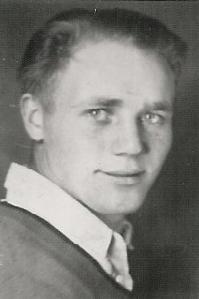
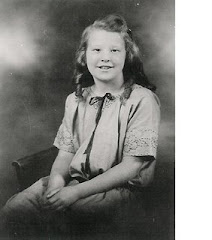
A history of Elizabeth Householder Russell (1834-1911), written in 1942 by Mary Louisa Cleverly Day (1901-1980), a great-granddaughter, and edited on March 10, 2009, by Dean B. Cleverly, a second-great-grandson.
Elizabeth Householder, daughter of Jonathan Householder and Evan Painter, was born January 11, 1834, at Armstrong County, Pennsylvania. Her mother died when she was twelve years old. She married James Russell on September 5, 1851, at West Elizabeth, Allegheny County, Pennsylvania, when she was seventeen years of age. Her eyes were gray, her hair brown, her health good. She was especially interested in her family.
Elizabeth and her husband came to Utah in 1861 with an independent company. Her father came at the same time. They settled in Weber Valley at Hoyts Mill. The Hoytsville settlement was in Summit County, just south of what is now Coalville. Elizabeth and James had five small children at the time. Three children were born to them under the poor living conditions in Weber Valley. A daughter was born the same year they arrived. A son died and was buried there.
Elizabeth didn't join the Church, but her husband did. She was very pious and very religious. She did not believe in dancing or reading of novels. Her children were allowed to read only the best reading materials. She taught her children to pray and to be honest, so honest that even if a pin were picked up it should be given back. She didn't think it right men should have more than one wife and couldn't understand the Mormon view of it. She was a good seamstress and taught her daughters to sew, knit, embroider, etc. When she finally owned a sewing machine she taught the girls to use it also. She had had schooling and in turn gave it to her children.
When anyone was in need of help you could always find Mrs. Russell there doing her part. A neighbor's small child got lost in the sagebrush soon after the family got to the valley. Mrs. Russell had her oldest daughter watch the children and went with her husband in search of the lost child. This hunt lasted a week, and she was there until they found the child, which had wandered until it got to the mountains.
The old cemetery near Coalville, which has been moved now, joined on to the farm the Russells had. The Weber River also joined their land.
She finally persuaded her husband to go back to Pennsylvania in 1866. She buried a son, James, at St. Joseph, Missouri. When they boy was sick he kept asking for chicken. Two of the children, Annie and William, were sent to buy a chicken. They went up one side of the street and back on the other, but no chicken was to be found or bought. A couple of days passed, and the two children heard a noise while playing in the yard and saw a flock of quail coming. The quail landed in the yard. William had a stick in his hand and hit three of the birds, killing them. The rest flew away, and the quail was used to make soup for the sick boy.
Four more children were born to her while living in Pennsylvania and Kansas. She moved from Pennsylvania over to Kansas when that land was being pioneered. They came back to Utah in 1889 and settled in Provo. She lived there until her husband died in 1893. She then went back to Kansas to be with her children, leaving one married daughter in Utah.
She was mother of twelve children and left a large posterity. She died of dropsy [an old term for the swelling of soft tissues caused by the accumulation of excess water, probably edema caused by congestive heart failure] at St. John, Kansas, November 24, 1911. She was 77 years old.
When this history was written in 1942, there were seven children living and enjoying health. Annie Russell Ritchie, my grandmother, was the oldest living at age 85, and Melzine at age 66 the youngest.
Tuesday, March 10, 2009

Monday, January 26, 2009
Orrin Strong Lee Jr and his parents

Some of my ancestors appear in the photograph above:
- Orrin Strong Lee (1835-1919), my great-great-grandfather, standing left
- Orrin Strong Lee Jr. (1862-1948), my great-grandfather, standing right
- Sally Ann Miles Lee (1843-1918), my great-great-grandmother, sitting center
Saturday, September 27, 2008
Angels and ministers of grace
A funeral sermon I preached on Tuesday, December 28, 1993, at the funeral of my grandmother, Hazel Jane Lee Batt Pledger (1894–1993), who at her death on Christmas Eve in 1993 was in her 100th year of life. The talk was published in the Family Journal on November 20, 1995, the 101st anniversary of her birth. This talk is also found in chapter 26 of Batt & Lee Ancestors.
Last Friday morning, after learning that Hazel had passed away, I told our children that Grandma had died. Our ten-year-old Eliza, with wisdom far beyond her years, asked, "Is that good or bad?"
"Good," I replied. Very good, indeed. In fact, as I reflected further upon it, I could not think of a single reason why we would consider it bad. Grandma had gone home for Christmas.
Hazel Jane Lee was born November 20, 1894, in Milo, Bonneville County, Idaho, the sixth of eleven children born to Orrin Strong Lee Jr. and Martha Jane White. At the time Milo was known as Leorin, so named after her father or grandfather, both of whom were named Orrin Lee; before that the area was also known as Willow Creek.
Ten years earlier, in 1884, her parents, who had been married not quite two years, came in late November to eastern Idaho, still six years away from statehood. The young couple arrived in Eagle Rock (now Idaho Falls), having traveled for 11 days by wagon in cold, bleak weather. They spent the winter with Martha’s sister and her husband in the Willow Creek area.
The next spring they drove around the valley looking for suitable land and finally filed a homestead claim on 160 acres covered with heavy sagebrush growing in excellent soil. That first year they cleared only an acre and a half, on which they planted wheat and alfalfa. The first crop of wheat yielded sixty bushels to the acre.
Their first home was a one-room log cabin, which Orrin built with cottonwood logs he cut on the island east of Menan. As the family grew, Orrin added two rooms to their home. Later, the original log room was taken down and a two-story frame building added on to the two rooms. It was into this home that Hazel was born on November 20, 1894.
In 1906, at a cost of $7,000, the home was completely modernized, including a pressure water system and a telephone, one of the finest homes in the valley. Eighteen months later, on April 27, 1908, when Hazel was fourteen, a fire destroyed the home. I can remember Grandma's telling me about seeing the flames in the distance as she was returning home from school.
That summer Orrin's hair turned white. Discouraged, the family moved their few remaining belongings into the apple cellar and set about rebuilding the house.
Hazel’s mother did a lot of sewing for the neighbors because she had the only sewing machine in the area. She was an artist with a needle, crochet hook, and knitting needle. She was a master gardener and took much pride in her flowers and gardens. The Lee homestead had a fruit orchard, beautiful trees, shrubs, big lawns, flowers everywhere, and always a big vegetable garden whose produce was freely shared by all. From 1892 until 1910 she operated the Leorin post office out of their home. She was long involved in the work of Relief Society. For six years she served as a trustee of the local school district.
Is it any wonder Dorothy and Ruth and Bill and Berniece remember the things they do about their mother, as we've heard in these earlier tributes: her industry, her thrift, her insistence on a job well done, her devotion to duty.
In the years right before World War I, Hazel left the pastoral scenes of her childhood in eastern Idaho and went off to school to attend the Utah Agricultural College in Logan. There she met, became acquainted with, and fell in love with one of the stars of the football team, William B. Batt. They were married in the Logan Temple on October 8, 1914. The next year Dorothy was born, and only weeks later they were off to Idaho, where they would live in various locations throughout southeastern Idaho and northern Utah while Grandpa taught school. Ruth came the following year, 1916. Bill was born in 1921. And Berniece in 1923.
Jackie, as she read Dorothy's tribute, summarized in fine fashion the middle years of Grandma’s life—her severe illness during World War II that nearly cost her her life, her finishing her college degree, her teaching school in Idaho, her mission to New England, Grandpa’s death in the mission field on February 4, 1959, and the lonely years that followed after that.
And then Harry Pledger came into her life. On March 1, 1973, Hazel and Harry were married for time only in the Ogden Temple. Grandma had been a widow for fourteen years. She was 78 years old. They had a good decade of wonderful time together before their advancing years started to catch up with them and their health started to fail them. After the floods in the spring of 1983, which forced them to evacuate their Farmington home, Harry declined until his death on January 13, 1985.
For a second time she buried a husband. A little over two years earlier she had buried her oldest daughter, Dorothy, my mother. She never thought she would live to see the day one of her children would go before she did.
She is survived by three of her four children: Ruth Tovey of Bountiful, Bill Batt of Spokane, and Berniece Palmer of Tooele. And, according to our best calculation, by 26 grandchildren, 104 great-grandchildren, 60 great-great-grandchildren, and one great-great-great-granddaughter. She is also survived by one brother, Perry Lee of Butte, Montana.
There is in the revelations what has been called the "law of the mourner." In it the Lord says, "Thou shalt live together in love, insomuch that thou shalt weep for the loss of them that die, and more especially for those that have not hope of a glorious resurrection" (D&C 42:45).
That much of the revelation does not apply in this particular case, but the next verse does: "And it shall come to pass that those that die in me shall not taste of death, for it shall be sweet unto them" (D&C 42:46).
And that does apply to Grandma. She is one who, from everything I understand about the scriptures, qualifies as one who has, to use the Lord’s terminology, "died in me." She has been faithful. She has endured to the end. She has hope of a glorious resurrection. She has died in the Lord. And that is why there is really no sadness, but rather rejoicing, on this occasion.
Grandma turned 99 on November 20 of this year. She was in her 100th year. Imagine the incredible things she witnessed during the century that she lived—from the Wright brothers at Kitty Hawk to men walking on the moon, from the days of horse and buggy to modern means of rapid travel and nearly instant communication.
In November 1894, when she was born, Wilford Woodruff was the President of the Church and would be for another four years. The Salt Lake Temple had been dedicated just a year and a half earlier. The Manifesto, which announced the end of plural marriage in the Church, was only four years past. She would be four and a half years old when Lorenzo Snow, the next President of the Church, traveled to St. George, in southern Utah, to receive the revelation on tithing that was depicted in the Church movie The Windows of Heaven. She would be nearly seven years old when President Snow died and Joseph F. Smith became the next President of the Church. She has lived during the administrations of 10 of the 13 Prophets who have presided over the Church.
In November 1894, when she was born, Idaho had been a state less than five years. Statehood for Utah was still a year in the future. Grover Cleveland was the president of the United States (his second time around). William McKinley would be elected in 1896, just before her second birthday, and would lead the country through the Spanish–American War. President McKinley would be assassinated in 1901, just shortly into his second term and during Hazel’s seventh year.
She lived to see the beginning of the fulfillment of the Prophet Joseph Smith’s prophecy on Christmas Day 1832 that "the time will come that war will be poured out upon all nations" (D&C 87:2). World War I—that war to end all wars—was raging in Europe during the years Hazel was marrying and beginning her family. A generation later, as World War II erupted, she would see her only son Bill in the uniform of his country. And she lived to witness the incredible world events that all of us have seen, as prophesied by President Spencer W. Kimball, in these closing years of the twentieth century.
A personal note before I close. I inherited from both my grandmother and my mother a love for reading. In one of Shakespeare’s immortal plays, Hamlet wisely implored, "Angels and ministers of grace defend us!" (Hamlet, act 1, scene 4, line 39). Angels and ministers of grace! All of us, I am convinced, both need and in fact receive far more help in our daily lives than we realize from the angels and ministers of grace who surround us—on both sides of the veil.
Grandma was just such an angel and minister of grace in my young life. Our family moved from Oregon to Idaho in the early spring of 1959, just shortly after Grandpa Batt died in the mission field. I was nine years old. And shy. And probably having a difficult time with leaving the people and surroundings that I had been used to. That was the first time I had ever moved, and when we went to church in the old Nampa Second Ward I was put in the wrong Sunday School class. Well, a week or so later, after I discovered that error, I was so embarrassed that I decided I could never go back to church again.
And somehow, it seems incredible to me now, my parents let me persist in my inactivity for several weeks or months, and I shudder to think how different my life could have been had that continued. But then Grandma came to visit. Sunday morning came, and to Grandma it was unthinkable that a nine-year-old grandson of hers would not be in church on Sunday, and so I went and have been ever since. Angels and ministers of grace!
A few years later, when I was 11 and 12, we would go visit Grandma, who then lived next door to the Palmers in Grantsville. I loved to hear Grandma tell of her experiences in the mission field in New England. And to hear her talk about the gospel. She fired in me what has become a life-long love affair with the holy scriptures. It was probably she, more than any other person, who got me to read the Book of Mormon cover to cover when I was only twelve. And how that marvelous book has changed my life. All our lives. Angels and ministers of grace!
Well, in conclusion. Grandma has gone home. I can only imagine how sweet the reunions have been on the other side. What a neat Christmas present!
Elder Orson F. Whitney, a member of the Quorum of the Twelve earlier in this century, once said: "A funeral sermon is not for the benefit of the departed; rather it is for the good of those who remain. The dead, as we call them—though they are no more dead than we are, and are as much alive now as ever—are beyond our reach, just as they are beyond our vision. We cannot add to anything that they have done, nor can we take anything away. They have made their record and are in the keeping of a higher Power. But we can do something to comfort those who mourn, and by acts of kindness lessen human suffering. Our Father in heaven expects this at our hands" (Improvement Era, Nov. 1918, 3).
Hazel has now gone into the spirit world. "And where is this spirit world?" asked Elder Whitney in a funeral sermon he delivered in 1918, when Grandma was a young mother only 24 years old. "Is it off in some distant part of the universe? Do we sail away into space millions of miles in order to get there? No. The spirit world, according to Joseph Smith, is right around us. Our dead friends, as we call them—our departed loved ones—are very near us, so near, the Prophet says, that they are often grieved by what we do and say. To get into the spirit world, we have only to pass out of the body.
"The spirit world, as I understand it, is the spirit of this planet. When God made the earth he made it twice. When he made man he made him twice. When he made the animals, the fishes, and the fowls, he made them twice. When he made the beautiful flowers, such as you see here today, he made them twice. First as spirits and then as bodies, and when the spirits entered their bodies they became souls. This is the teaching of modern revelation; the teaching of Joseph Smith. God made the earth first as a spirit and then gave it a body, and what we call the spirit world is simply the spiritual half of the sphere we dwell in" (Improvement Era, Nov. 1918, 8).
Earth life is a school. "This earth was made for God’s children, his spirit sons and daughters, who take bodies and pass through experiences of joy and sorrow for their development and education, and to demonstrate through time’s vicissitudes that they will be true to God and do all that he requires at their hands.
"When we have done the things that we were sent to do," continued Elder Whitney, "when we have gained all the experience that this life affords, then is the best time to depart. School being out, why not go home? The mission ended, why not return? That is what death means to a Latter-day Saint. The only sad thing about it is parting with the loved ones who go, . . . but it is simply a passing into the spirit world, to await the resurrection, when our bodies and spirits will be reunited—the righteous to enjoy the presence of God.
"If we can be patient and resigned, and by God’s help do his holy will, all will come out well. Trials purify us, educate us, develop us. The great reason why man was placed upon the earth was that he might become more like his Father and God. That is why we are here, children at school. What matters it when school is out and the time comes to go back home?" (Improvement Era, Nov. 1918, 9–11).
We have paid tributes to Hazel today, but the ultimate tribute is the way we live our lives in quiet devotion to the cause of the Master whom she loved and followed. On her 80th birthday, back in 1974, at my invitation Grandma wrote a birthday greeting to all her family. I close with the words that she wrote on that occasion nearly two decades ago:
"As our eightieth year has arrived, there are many lessons we have learned and many, many things we have neglected to do. It is of these procrastinations I would warn you.
"I have had many people ask me, 'When do you think one should start to train a child?' And my answer has always been, 'Before they are born.' We cannot wait until a child is half past seven, depending on the Church to prepare them for baptism.
"All the beauty, value, and wonder of this great privilege should fall upon the parents. The same is true of celestial marriage, a mission, living a clean life, just to mention a few. This should be the very atmosphere of their lives from infancy—not preached or forced upon them, just lived day by day.
"So once again," she continues to write, "do not put off until tomorrow learning the things the Lord would have us do and, in turn, passing this knowledge on to your children, relatives, friends, and 'the stranger within your gates.'
"Pay your tithes and offerings in full. Be diligent in your prayers, and from long experience, I can guarantee that the Lord will bless and guide you beyond your wildest dreams.
"If I have influenced or helped any of you through the years, I am humbly grateful. We love you and pray for you." Signed Grandma Hazel.
God lives. His Son, whose birth we've just celebrated, lives. They send angels and ministers of grace into our lives to bless us everlastingly. Such has been the life of Hazel Jane Lee Batt Pledger. May we, like her, be as the Book of Mormon writer described, "instruments in the hands of God in bringing many to the knowledge of the truth, yea, to the knowledge of their Redeemer. And how blessed are they! For they did publish peace; they did publish good tidings of good" (Mosiah 27:36–37).
May we go and do likewise, I pray in the name of the Lord Jesus Christ, amen.
Last Friday morning, after learning that Hazel had passed away, I told our children that Grandma had died. Our ten-year-old Eliza, with wisdom far beyond her years, asked, "Is that good or bad?"
"Good," I replied. Very good, indeed. In fact, as I reflected further upon it, I could not think of a single reason why we would consider it bad. Grandma had gone home for Christmas.
Hazel Jane Lee was born November 20, 1894, in Milo, Bonneville County, Idaho, the sixth of eleven children born to Orrin Strong Lee Jr. and Martha Jane White. At the time Milo was known as Leorin, so named after her father or grandfather, both of whom were named Orrin Lee; before that the area was also known as Willow Creek.
Ten years earlier, in 1884, her parents, who had been married not quite two years, came in late November to eastern Idaho, still six years away from statehood. The young couple arrived in Eagle Rock (now Idaho Falls), having traveled for 11 days by wagon in cold, bleak weather. They spent the winter with Martha’s sister and her husband in the Willow Creek area.
The next spring they drove around the valley looking for suitable land and finally filed a homestead claim on 160 acres covered with heavy sagebrush growing in excellent soil. That first year they cleared only an acre and a half, on which they planted wheat and alfalfa. The first crop of wheat yielded sixty bushels to the acre.
Their first home was a one-room log cabin, which Orrin built with cottonwood logs he cut on the island east of Menan. As the family grew, Orrin added two rooms to their home. Later, the original log room was taken down and a two-story frame building added on to the two rooms. It was into this home that Hazel was born on November 20, 1894.
In 1906, at a cost of $7,000, the home was completely modernized, including a pressure water system and a telephone, one of the finest homes in the valley. Eighteen months later, on April 27, 1908, when Hazel was fourteen, a fire destroyed the home. I can remember Grandma's telling me about seeing the flames in the distance as she was returning home from school.
That summer Orrin's hair turned white. Discouraged, the family moved their few remaining belongings into the apple cellar and set about rebuilding the house.
Hazel’s mother did a lot of sewing for the neighbors because she had the only sewing machine in the area. She was an artist with a needle, crochet hook, and knitting needle. She was a master gardener and took much pride in her flowers and gardens. The Lee homestead had a fruit orchard, beautiful trees, shrubs, big lawns, flowers everywhere, and always a big vegetable garden whose produce was freely shared by all. From 1892 until 1910 she operated the Leorin post office out of their home. She was long involved in the work of Relief Society. For six years she served as a trustee of the local school district.
Is it any wonder Dorothy and Ruth and Bill and Berniece remember the things they do about their mother, as we've heard in these earlier tributes: her industry, her thrift, her insistence on a job well done, her devotion to duty.
In the years right before World War I, Hazel left the pastoral scenes of her childhood in eastern Idaho and went off to school to attend the Utah Agricultural College in Logan. There she met, became acquainted with, and fell in love with one of the stars of the football team, William B. Batt. They were married in the Logan Temple on October 8, 1914. The next year Dorothy was born, and only weeks later they were off to Idaho, where they would live in various locations throughout southeastern Idaho and northern Utah while Grandpa taught school. Ruth came the following year, 1916. Bill was born in 1921. And Berniece in 1923.
Jackie, as she read Dorothy's tribute, summarized in fine fashion the middle years of Grandma’s life—her severe illness during World War II that nearly cost her her life, her finishing her college degree, her teaching school in Idaho, her mission to New England, Grandpa’s death in the mission field on February 4, 1959, and the lonely years that followed after that.
And then Harry Pledger came into her life. On March 1, 1973, Hazel and Harry were married for time only in the Ogden Temple. Grandma had been a widow for fourteen years. She was 78 years old. They had a good decade of wonderful time together before their advancing years started to catch up with them and their health started to fail them. After the floods in the spring of 1983, which forced them to evacuate their Farmington home, Harry declined until his death on January 13, 1985.
For a second time she buried a husband. A little over two years earlier she had buried her oldest daughter, Dorothy, my mother. She never thought she would live to see the day one of her children would go before she did.
She is survived by three of her four children: Ruth Tovey of Bountiful, Bill Batt of Spokane, and Berniece Palmer of Tooele. And, according to our best calculation, by 26 grandchildren, 104 great-grandchildren, 60 great-great-grandchildren, and one great-great-great-granddaughter. She is also survived by one brother, Perry Lee of Butte, Montana.
There is in the revelations what has been called the "law of the mourner." In it the Lord says, "Thou shalt live together in love, insomuch that thou shalt weep for the loss of them that die, and more especially for those that have not hope of a glorious resurrection" (D&C 42:45).
That much of the revelation does not apply in this particular case, but the next verse does: "And it shall come to pass that those that die in me shall not taste of death, for it shall be sweet unto them" (D&C 42:46).
And that does apply to Grandma. She is one who, from everything I understand about the scriptures, qualifies as one who has, to use the Lord’s terminology, "died in me." She has been faithful. She has endured to the end. She has hope of a glorious resurrection. She has died in the Lord. And that is why there is really no sadness, but rather rejoicing, on this occasion.
Grandma turned 99 on November 20 of this year. She was in her 100th year. Imagine the incredible things she witnessed during the century that she lived—from the Wright brothers at Kitty Hawk to men walking on the moon, from the days of horse and buggy to modern means of rapid travel and nearly instant communication.
In November 1894, when she was born, Wilford Woodruff was the President of the Church and would be for another four years. The Salt Lake Temple had been dedicated just a year and a half earlier. The Manifesto, which announced the end of plural marriage in the Church, was only four years past. She would be four and a half years old when Lorenzo Snow, the next President of the Church, traveled to St. George, in southern Utah, to receive the revelation on tithing that was depicted in the Church movie The Windows of Heaven. She would be nearly seven years old when President Snow died and Joseph F. Smith became the next President of the Church. She has lived during the administrations of 10 of the 13 Prophets who have presided over the Church.
In November 1894, when she was born, Idaho had been a state less than five years. Statehood for Utah was still a year in the future. Grover Cleveland was the president of the United States (his second time around). William McKinley would be elected in 1896, just before her second birthday, and would lead the country through the Spanish–American War. President McKinley would be assassinated in 1901, just shortly into his second term and during Hazel’s seventh year.
She lived to see the beginning of the fulfillment of the Prophet Joseph Smith’s prophecy on Christmas Day 1832 that "the time will come that war will be poured out upon all nations" (D&C 87:2). World War I—that war to end all wars—was raging in Europe during the years Hazel was marrying and beginning her family. A generation later, as World War II erupted, she would see her only son Bill in the uniform of his country. And she lived to witness the incredible world events that all of us have seen, as prophesied by President Spencer W. Kimball, in these closing years of the twentieth century.
A personal note before I close. I inherited from both my grandmother and my mother a love for reading. In one of Shakespeare’s immortal plays, Hamlet wisely implored, "Angels and ministers of grace defend us!" (Hamlet, act 1, scene 4, line 39). Angels and ministers of grace! All of us, I am convinced, both need and in fact receive far more help in our daily lives than we realize from the angels and ministers of grace who surround us—on both sides of the veil.
Grandma was just such an angel and minister of grace in my young life. Our family moved from Oregon to Idaho in the early spring of 1959, just shortly after Grandpa Batt died in the mission field. I was nine years old. And shy. And probably having a difficult time with leaving the people and surroundings that I had been used to. That was the first time I had ever moved, and when we went to church in the old Nampa Second Ward I was put in the wrong Sunday School class. Well, a week or so later, after I discovered that error, I was so embarrassed that I decided I could never go back to church again.
And somehow, it seems incredible to me now, my parents let me persist in my inactivity for several weeks or months, and I shudder to think how different my life could have been had that continued. But then Grandma came to visit. Sunday morning came, and to Grandma it was unthinkable that a nine-year-old grandson of hers would not be in church on Sunday, and so I went and have been ever since. Angels and ministers of grace!
A few years later, when I was 11 and 12, we would go visit Grandma, who then lived next door to the Palmers in Grantsville. I loved to hear Grandma tell of her experiences in the mission field in New England. And to hear her talk about the gospel. She fired in me what has become a life-long love affair with the holy scriptures. It was probably she, more than any other person, who got me to read the Book of Mormon cover to cover when I was only twelve. And how that marvelous book has changed my life. All our lives. Angels and ministers of grace!
Well, in conclusion. Grandma has gone home. I can only imagine how sweet the reunions have been on the other side. What a neat Christmas present!
Elder Orson F. Whitney, a member of the Quorum of the Twelve earlier in this century, once said: "A funeral sermon is not for the benefit of the departed; rather it is for the good of those who remain. The dead, as we call them—though they are no more dead than we are, and are as much alive now as ever—are beyond our reach, just as they are beyond our vision. We cannot add to anything that they have done, nor can we take anything away. They have made their record and are in the keeping of a higher Power. But we can do something to comfort those who mourn, and by acts of kindness lessen human suffering. Our Father in heaven expects this at our hands" (Improvement Era, Nov. 1918, 3).
Hazel has now gone into the spirit world. "And where is this spirit world?" asked Elder Whitney in a funeral sermon he delivered in 1918, when Grandma was a young mother only 24 years old. "Is it off in some distant part of the universe? Do we sail away into space millions of miles in order to get there? No. The spirit world, according to Joseph Smith, is right around us. Our dead friends, as we call them—our departed loved ones—are very near us, so near, the Prophet says, that they are often grieved by what we do and say. To get into the spirit world, we have only to pass out of the body.
"The spirit world, as I understand it, is the spirit of this planet. When God made the earth he made it twice. When he made man he made him twice. When he made the animals, the fishes, and the fowls, he made them twice. When he made the beautiful flowers, such as you see here today, he made them twice. First as spirits and then as bodies, and when the spirits entered their bodies they became souls. This is the teaching of modern revelation; the teaching of Joseph Smith. God made the earth first as a spirit and then gave it a body, and what we call the spirit world is simply the spiritual half of the sphere we dwell in" (Improvement Era, Nov. 1918, 8).
Earth life is a school. "This earth was made for God’s children, his spirit sons and daughters, who take bodies and pass through experiences of joy and sorrow for their development and education, and to demonstrate through time’s vicissitudes that they will be true to God and do all that he requires at their hands.
"When we have done the things that we were sent to do," continued Elder Whitney, "when we have gained all the experience that this life affords, then is the best time to depart. School being out, why not go home? The mission ended, why not return? That is what death means to a Latter-day Saint. The only sad thing about it is parting with the loved ones who go, . . . but it is simply a passing into the spirit world, to await the resurrection, when our bodies and spirits will be reunited—the righteous to enjoy the presence of God.
"If we can be patient and resigned, and by God’s help do his holy will, all will come out well. Trials purify us, educate us, develop us. The great reason why man was placed upon the earth was that he might become more like his Father and God. That is why we are here, children at school. What matters it when school is out and the time comes to go back home?" (Improvement Era, Nov. 1918, 9–11).
We have paid tributes to Hazel today, but the ultimate tribute is the way we live our lives in quiet devotion to the cause of the Master whom she loved and followed. On her 80th birthday, back in 1974, at my invitation Grandma wrote a birthday greeting to all her family. I close with the words that she wrote on that occasion nearly two decades ago:
"As our eightieth year has arrived, there are many lessons we have learned and many, many things we have neglected to do. It is of these procrastinations I would warn you.
"I have had many people ask me, 'When do you think one should start to train a child?' And my answer has always been, 'Before they are born.' We cannot wait until a child is half past seven, depending on the Church to prepare them for baptism.
"All the beauty, value, and wonder of this great privilege should fall upon the parents. The same is true of celestial marriage, a mission, living a clean life, just to mention a few. This should be the very atmosphere of their lives from infancy—not preached or forced upon them, just lived day by day.
"So once again," she continues to write, "do not put off until tomorrow learning the things the Lord would have us do and, in turn, passing this knowledge on to your children, relatives, friends, and 'the stranger within your gates.'
"Pay your tithes and offerings in full. Be diligent in your prayers, and from long experience, I can guarantee that the Lord will bless and guide you beyond your wildest dreams.
"If I have influenced or helped any of you through the years, I am humbly grateful. We love you and pray for you." Signed Grandma Hazel.
God lives. His Son, whose birth we've just celebrated, lives. They send angels and ministers of grace into our lives to bless us everlastingly. Such has been the life of Hazel Jane Lee Batt Pledger. May we, like her, be as the Book of Mormon writer described, "instruments in the hands of God in bringing many to the knowledge of the truth, yea, to the knowledge of their Redeemer. And how blessed are they! For they did publish peace; they did publish good tidings of good" (Mosiah 27:36–37).
May we go and do likewise, I pray in the name of the Lord Jesus Christ, amen.
Tuesday, May 6, 2008
Henry William Cleverly (Stella's version)
A history of Henry William Cleverly (1870–1955), written in 1951 by a daughter, Stella Camille Cleverly Mann (1907–1991)
Henry William Cleverly was born the son of James and Mary Alexander Cleverly August 6, 1870, with a twin sister Sarah Cleverly, at Calne, Wiltshire, England. At the age of one year, he with his parents, brothers, and sisters, left their home and traveled to Liverpool, England. Here, with 300 Saints, they sailed to America on the steamship Nevada on September 18, 1871. George H. Peterson was in charge of the group. The company arrived at New York on November 1, 1871. The Cleverly family arrived in Salt Lake City on November 11, 1871. They had used the Perpetual Emigrating Fund to come from England.
Henry William’s sister, Ellen Cleverly Salter, met them at their arrival in the Salt Lake Valley and took them in a wagon with oxen to her place, which consisted of one log room and an attic. The name of the place was Bountiful, but it was later renamed Woods Cross. The family stayed with Ellen until they got a place fixed near the river, where they lived until Grandfather [James Cleverly] bought a place from Jasper Perkins near their daughter Ellen. The place had one log room and many acres of land. There were some locust trees growing near the hut, and today two of those trees planted by Jasper Perkins are still growing. The family built on another log room, and this was their home for several years. Later two rooms were built of brick.
As Henry William grew, he had things to do, as well as his brothers and sisters. When he was eight years old, he herded cows for people at ten cents a day, and then sometimes he wasn’t paid. His father died in June of 1878. Henry William was away herding cows at the time. From then on his mother was father as well as mother to her children.
In 1879 a contagious disease called diphtheria was among the people. Father’s twin sister, Sarah, died of this disease, but the other children got over it. The children were very sick, and Grandmother thought her children would die, but she prayed and had faith that they would get well. While they were getting well again, the children couldn’t eat. Henry William and his brother Abel went out and ate gooseberries. These were the first thing they could eat and retain since their sickness.
When Henry was twelve years old, he used to help his Uncle Able Alexander bind the wheat. He rode the lead horse day after day while his uncle did the binding. Abel Alexander did the binding for all the people in the neighborhood. The Lucerne grew so high and thick that it would have to be moved with a fork before it could be moved. His uncle gave him good counsel and advice and always liked to work with him.
Henry William and Tom Burtenshaw, a neighbor boy, played together and had fun as well as getting into mischief. They got the cream jar once and ate cream until they couldn’t eat anymore then they poured the rest down the well. They paid for this stunt because they never liked cream after this.
His schooling was limited because of the cost, but he would go when he had the money. Henry went as far as the fourth reader. The school was held in homes, and these were the homes he went to: Belle Noble, Sarah A. Howard, Mary Mills, and Rebecca Brown.
Henry was a good religious boy and would go to Sunday School and all other meetings regardless of what kind of weather. The roads used to be so muddy that when they took horse and wagon they would have to get out and walk because the horses couldn’t pull the wagon through the mud. The first ward he belonged to was Bountiful. It was then divided into the East Bountiful, West Bountiful, and South Bountiful Wards. He then belonged to the South Bountiful Ward with Bishop William Brown as their leader. He tried to do whatever the bishop asked him to do.
His brother Abel was digging a pit, and he got too close and was hit in the head with the pick.
When he was about fourteen years old, he went to the sheep camps to help his brothers. He did most of the cooking, and then later he herded sheep with his brothers. Later he herded for the Hatch brothers and then when the Deseret Livestock Company was organized he herded for them. He farmed in the summer, herded sheep in the winter.
When he was eighteen, Henry decided to smoke but never out in public or in the house. He smoked for twenty years and then quit. He tells the other men and boys they can quit if the want to because he did.
Henry took care of his mother and farmed her place. When the school house, the second one, was built he helped build it. We called it the red schoolhouse. It was across the street from Tom Burtenshaw’s place.
Henry was twenty-eight years old when he got married. He married Olive Ellen Ritchie on December 21, 1898, at the old McDuff place. He began working at the brick yard, which wasn’t too far from where they lived. He helped make the brick for the West Bountiful church and the South Bountiful church house. He made all the brick that went into his home, which was built in 1904. His wife carried the bricks while he laid them with the mortar. They lived with his mother before they built their own home.
Henry liked to sing and was very good at it. He was a member of the choir until the South Bountiful Ward was divided in 1938. Then he belonged to the Orchard Ward. He belonged to a male quartet called Diamond Quartet and to the Bonneville Dramatic Club. He played the violin, guitar, banjo, and harmonica. He had several quartet groups that he taught, and they would sing at various wards and special programs. He often sang in contests the Mutual had. He took vocal lessons from Professor David Mann and some from Horace Ensign.
Henry was a good sportsman, liking fishing, hunting, wrestling, boxing, baseball, and basketball. He was a great duck hunter and for years sold ducks and rabbits to the eating places in Salt Lake.
Henry kept the commandments of God and taught his children by principle as well as example. He was a ward teacher for over fifty years. He and his companion, Joseph Moss, were ward teachers together for twenty years and didn’t miss a month.
He played ball with the fellows of the community, and he played many games at the Bountiful ball diamond. This was just a block south of the Bamberger station and east of the Hales Hall Dance Building. A welding outfit has the building today. He taught his children to play ball and played with them. Almost any day of the week while resting from the farm labors you could see a ball game going on at William Cleverly’s place with the neighbor boys and girls, as well as his own children.
He has had several narrow escapes from what seemed sure death. He liked to wrestle and would show his boys how to get the holds. After one of these wrestling sprees one day he passed one of the boys in the dining room, made a pass at him, and slipped and fell, hitting the china closet. A piece of glass pierced his lung, going in through the back. The doctor took the glass out, and Father has the glass yet. He has been in automobile accidents, but has been blessed by not being seriously hurt.
Henry William was a hard working man and had his children work along with him. He was a farmer and also a truck gardener. He worked at Cudahy Packing Company as a bricklayer and plasterer. When it became hard for the farmer to sell his produce, he bought cows and cared for them, selling the milk to Moss Brothers Dairy. Then he became ill and was getting at the age where he had to take it easy, so he let his son Elwood take over the place.
When Henry’s second son, a twin Eldred, was kicked by a horse, and he had to be operated on, he watched the operation. It was a real sorrow for Father. Eldred lived ten days after the accident.
Henry William Cleverly was born the son of James and Mary Alexander Cleverly August 6, 1870, with a twin sister Sarah Cleverly, at Calne, Wiltshire, England. At the age of one year, he with his parents, brothers, and sisters, left their home and traveled to Liverpool, England. Here, with 300 Saints, they sailed to America on the steamship Nevada on September 18, 1871. George H. Peterson was in charge of the group. The company arrived at New York on November 1, 1871. The Cleverly family arrived in Salt Lake City on November 11, 1871. They had used the Perpetual Emigrating Fund to come from England.
Henry William’s sister, Ellen Cleverly Salter, met them at their arrival in the Salt Lake Valley and took them in a wagon with oxen to her place, which consisted of one log room and an attic. The name of the place was Bountiful, but it was later renamed Woods Cross. The family stayed with Ellen until they got a place fixed near the river, where they lived until Grandfather [James Cleverly] bought a place from Jasper Perkins near their daughter Ellen. The place had one log room and many acres of land. There were some locust trees growing near the hut, and today two of those trees planted by Jasper Perkins are still growing. The family built on another log room, and this was their home for several years. Later two rooms were built of brick.
As Henry William grew, he had things to do, as well as his brothers and sisters. When he was eight years old, he herded cows for people at ten cents a day, and then sometimes he wasn’t paid. His father died in June of 1878. Henry William was away herding cows at the time. From then on his mother was father as well as mother to her children.
In 1879 a contagious disease called diphtheria was among the people. Father’s twin sister, Sarah, died of this disease, but the other children got over it. The children were very sick, and Grandmother thought her children would die, but she prayed and had faith that they would get well. While they were getting well again, the children couldn’t eat. Henry William and his brother Abel went out and ate gooseberries. These were the first thing they could eat and retain since their sickness.
When Henry was twelve years old, he used to help his Uncle Able Alexander bind the wheat. He rode the lead horse day after day while his uncle did the binding. Abel Alexander did the binding for all the people in the neighborhood. The Lucerne grew so high and thick that it would have to be moved with a fork before it could be moved. His uncle gave him good counsel and advice and always liked to work with him.
Henry William and Tom Burtenshaw, a neighbor boy, played together and had fun as well as getting into mischief. They got the cream jar once and ate cream until they couldn’t eat anymore then they poured the rest down the well. They paid for this stunt because they never liked cream after this.
His schooling was limited because of the cost, but he would go when he had the money. Henry went as far as the fourth reader. The school was held in homes, and these were the homes he went to: Belle Noble, Sarah A. Howard, Mary Mills, and Rebecca Brown.
Henry was a good religious boy and would go to Sunday School and all other meetings regardless of what kind of weather. The roads used to be so muddy that when they took horse and wagon they would have to get out and walk because the horses couldn’t pull the wagon through the mud. The first ward he belonged to was Bountiful. It was then divided into the East Bountiful, West Bountiful, and South Bountiful Wards. He then belonged to the South Bountiful Ward with Bishop William Brown as their leader. He tried to do whatever the bishop asked him to do.
His brother Abel was digging a pit, and he got too close and was hit in the head with the pick.
When he was about fourteen years old, he went to the sheep camps to help his brothers. He did most of the cooking, and then later he herded sheep with his brothers. Later he herded for the Hatch brothers and then when the Deseret Livestock Company was organized he herded for them. He farmed in the summer, herded sheep in the winter.
When he was eighteen, Henry decided to smoke but never out in public or in the house. He smoked for twenty years and then quit. He tells the other men and boys they can quit if the want to because he did.
Henry took care of his mother and farmed her place. When the school house, the second one, was built he helped build it. We called it the red schoolhouse. It was across the street from Tom Burtenshaw’s place.
Henry was twenty-eight years old when he got married. He married Olive Ellen Ritchie on December 21, 1898, at the old McDuff place. He began working at the brick yard, which wasn’t too far from where they lived. He helped make the brick for the West Bountiful church and the South Bountiful church house. He made all the brick that went into his home, which was built in 1904. His wife carried the bricks while he laid them with the mortar. They lived with his mother before they built their own home.
Henry liked to sing and was very good at it. He was a member of the choir until the South Bountiful Ward was divided in 1938. Then he belonged to the Orchard Ward. He belonged to a male quartet called Diamond Quartet and to the Bonneville Dramatic Club. He played the violin, guitar, banjo, and harmonica. He had several quartet groups that he taught, and they would sing at various wards and special programs. He often sang in contests the Mutual had. He took vocal lessons from Professor David Mann and some from Horace Ensign.
Henry was a good sportsman, liking fishing, hunting, wrestling, boxing, baseball, and basketball. He was a great duck hunter and for years sold ducks and rabbits to the eating places in Salt Lake.
Henry kept the commandments of God and taught his children by principle as well as example. He was a ward teacher for over fifty years. He and his companion, Joseph Moss, were ward teachers together for twenty years and didn’t miss a month.
He played ball with the fellows of the community, and he played many games at the Bountiful ball diamond. This was just a block south of the Bamberger station and east of the Hales Hall Dance Building. A welding outfit has the building today. He taught his children to play ball and played with them. Almost any day of the week while resting from the farm labors you could see a ball game going on at William Cleverly’s place with the neighbor boys and girls, as well as his own children.
He has had several narrow escapes from what seemed sure death. He liked to wrestle and would show his boys how to get the holds. After one of these wrestling sprees one day he passed one of the boys in the dining room, made a pass at him, and slipped and fell, hitting the china closet. A piece of glass pierced his lung, going in through the back. The doctor took the glass out, and Father has the glass yet. He has been in automobile accidents, but has been blessed by not being seriously hurt.
Henry William was a hard working man and had his children work along with him. He was a farmer and also a truck gardener. He worked at Cudahy Packing Company as a bricklayer and plasterer. When it became hard for the farmer to sell his produce, he bought cows and cared for them, selling the milk to Moss Brothers Dairy. Then he became ill and was getting at the age where he had to take it easy, so he let his son Elwood take over the place.
When Henry’s second son, a twin Eldred, was kicked by a horse, and he had to be operated on, he watched the operation. It was a real sorrow for Father. Eldred lived ten days after the accident.
Henry William Cleverly (Louisa's version)
A history of Henry William Cleverly (1870–1955), written in 1950 by a daughter, Mary Louisa Cleverly Day (1901–1980)
Henry William Cleverly was born August 6, 1870, at Calne, Wiltshire, England. He was a twin with his sister, Sarah Cleverly. They were son and daughter of James and Mary Alexander Cleverly.
At the age of one year, with his parents and brothers and sisters, he sailed to the United States of America. They came to Utah to make their home. Henry William had two brothers, Francis and Jesse, and a sister, Ellen Salter, already living in Utah.
Henry William has lived at the same place for nearly all of his eighty years. Upon arrival in the new country, the family stayed with the daughter, Mrs. William Salter, until they got a place near the river, where they lived until they bought the place where the home now stands, located on Highway 91 [now numbered as Highway 89], the Salt Lake and Ogden highway, just about six or seven miles from Salt Lake City and three miles from Bountiful City. It was a two-room log house, and later two rooms were added of brick. Jasper Perkins did the finishing inside.
Henry William when a small boy herded cows on the foothills and river lands for ten to fifteen cents a day. He was used to going barefooted because it was hard to keep a large family in shoes. He was the eleventh child of twelve.
When he was eight years old, his father died, and his mother had to be father as well as mother to him. His twin sister died of diphtheria. His youngest sister Mary died with it also just before his father died.
Henry William had blonde hair, blue eyes, and sandy complexion. He is about five feet nine inches in height. In his teen years he went sheep herding for Hatch Brothers and then later herded for the Deseret Livestock Company.
He belonged to the Bountiful Ward and then when it was divided into other wards he was in South Bountiful Ward. He attended the meetings, dances, and every recreation he could. His schooling was limited because of the cost, but he went as much as he could and passed the fifth reader. The old rock school house where he went to school was south of where he lived about a mile or more, near the Davis County–Salt Lake County line, next to the home of Samuel Mills. Wiesers have the property now and have houses on it.
Henry William loved music and played a violin as well as sing.
He married Olive Ellen Ritchie on December 21, 1898. Then on June 14, 1899, they were married in the Salt Lake Temple for time and all eternity.
Henry William worked at the brickyard not far from his home, where he made bricks for the people around the community. After children came to bless them, the house wasn’t big enough, because Father and Mother lived with Father’s mother. Father made all the brick and laid them with the help of Mother to make a really nice home. Then the two log rooms were used for washing rooms and storing things. I was big enough to remember those rooms and the way we used to play house there. Father dug the wells on the place with help from the neighbor. He did all the plastering of the house.
When Dad was a boy he and Tom Burtenshaw, a neighbor boy, got in the cellar one day and ate all the cream off the milk, said they were hungry for it, instead of having it all made into butter. Well, both lads found out that cream wasn’t so good after all so much at a time. Neither of them liked cream after the steal.
Father and Mother had a large family, thirteen children, twelve living and one stillbirth. Two pairs of twin boys. Seven boys and six girls. He taught us to sing, play ball, and be good sports. He was a farmer and did brick laying and plastering.
Dad kept the commandments of God and taught his children by principle as well as example. He was a ward teacher for over fifty years. Joseph Moss and Dad were ward teacher companions for nearly thirty years. He belonged to the choir and sang tenor and was a member of the South Bountiful choir until the ward was divided in 1938. Dad then belonged to the new Orchard Ward. He had several quartet groups that he taught, and they would sing at the various wards and on special programs. Some of the men involved in these quartets included Bill Yeiter, Bill Hatch, George Salter, Joe Hart, Dick Gwynn, and Elmer Day.
He loved sports of all kinds and played ball with the fellows of the community. He taught his children to play ball and played with them. Almost any day of the week, while resting from the farm labors, you could see a ball game going on at the William Cleverly place. Neighbor boys and girls played, as well as his own.
He was a duck hunter and a good one. When ducks were plentiful, and the hunter could sell his kill, and there wasn’t a limit on them, Dad used to sell ducks to the restaurants and cafes in Salt Lake City.
He has had several narrow escapes from what seemed sure death. He was wrestling with the boys one day, and then when they were finished as he passed one of the boys in the dining room he made a pass at him and slipped and fell into the china closet, and a piece of glass pierced his lung, went in the back. Then he has been in car wrecks and hit by rocks, which have laid him up for a few days or so.
When his second son, Eldred, one of the twins, was kicked by a horse and had to be operated on, that was a real sorrow for him. The son lived ten days after the accident.
He was very good to his mother and cared for her until her death.
Every Thanksgiving was quite an event at the Cleverly place. With Grandma and Grandpa and all the aunts and uncles and everyone making such a do about things, it really was something for us kids to remember. Then when Dad’s kids began getting married and had their children, they joined in the singing, stories, etc. from nearly everyone.
One year, after the crops had turned out good and there was a rest before the fall work started, Dad and Mother loaded up the Ford and with some of the younger children started to Idaho to visit with Dad’s brothers. When they got to McCammon they put the Ford in a garage because they were going to stay all night there. During the night a fire broke out at the garage, and Dad’s Ford was burned with several other cars. This didn’t stop Dad’s trip. They took the train and went on to Uncle Frank and Uncle Jesse’s place.
The daughters and sons were getting older now and would soon be getting married. Daddy advised each one about the responsibilities of getting married. He had many joys and sorrows, and the biggest sorrow was when his wife died in 1945. Dad and Mother had gone to a basketball game to watch their three sons, Wayne, Ivard, and Irvin, play at the Deseret Gym. It was at this game that Mother had a stroke, resulting in her death three days later.
Dad and brother Elwood lived alone then until Dad’s health wasn’t so good, and then he had Sarah and her family move in with them.
In 1948 his brother’s wife died, and he went to Idaho Falls to the services, then over to see his brother Frank (Francis) at Rigby. While there he broke his ankle. It was fixed, and they wanted him to stay in the hospital there at Idaho Falls, but he wouldn’t. He said he wanted to come home, so brother Elwood, who had taken him up there, brought him home, and he wore a cast for months, but he felt better being home. He gets around well and doesn’t show any effects of having broken his ankle.
At the time of this being written, Dad is eighty years young and still enjoys the baseball and basketball games. He has a grandson who plays on the University of Utah basketball team.
He has eleven living children, ten of them married, and forty living grandchildren and fifteen great-grandchildren.
Each year on his wedding anniversary, which is December 21, we have a family Christmas party. Even after Mother passed away, we continue having the party. Each year there are more at the party.
When the Orchard Ward was under construction, Dad worked there day after day cleaning the bricks for the facing job, and many more jobs he did also.
Henry William Cleverly was born August 6, 1870, at Calne, Wiltshire, England. He was a twin with his sister, Sarah Cleverly. They were son and daughter of James and Mary Alexander Cleverly.
At the age of one year, with his parents and brothers and sisters, he sailed to the United States of America. They came to Utah to make their home. Henry William had two brothers, Francis and Jesse, and a sister, Ellen Salter, already living in Utah.
Henry William has lived at the same place for nearly all of his eighty years. Upon arrival in the new country, the family stayed with the daughter, Mrs. William Salter, until they got a place near the river, where they lived until they bought the place where the home now stands, located on Highway 91 [now numbered as Highway 89], the Salt Lake and Ogden highway, just about six or seven miles from Salt Lake City and three miles from Bountiful City. It was a two-room log house, and later two rooms were added of brick. Jasper Perkins did the finishing inside.
Henry William when a small boy herded cows on the foothills and river lands for ten to fifteen cents a day. He was used to going barefooted because it was hard to keep a large family in shoes. He was the eleventh child of twelve.
When he was eight years old, his father died, and his mother had to be father as well as mother to him. His twin sister died of diphtheria. His youngest sister Mary died with it also just before his father died.
Henry William had blonde hair, blue eyes, and sandy complexion. He is about five feet nine inches in height. In his teen years he went sheep herding for Hatch Brothers and then later herded for the Deseret Livestock Company.
He belonged to the Bountiful Ward and then when it was divided into other wards he was in South Bountiful Ward. He attended the meetings, dances, and every recreation he could. His schooling was limited because of the cost, but he went as much as he could and passed the fifth reader. The old rock school house where he went to school was south of where he lived about a mile or more, near the Davis County–Salt Lake County line, next to the home of Samuel Mills. Wiesers have the property now and have houses on it.
Henry William loved music and played a violin as well as sing.
He married Olive Ellen Ritchie on December 21, 1898. Then on June 14, 1899, they were married in the Salt Lake Temple for time and all eternity.
Henry William worked at the brickyard not far from his home, where he made bricks for the people around the community. After children came to bless them, the house wasn’t big enough, because Father and Mother lived with Father’s mother. Father made all the brick and laid them with the help of Mother to make a really nice home. Then the two log rooms were used for washing rooms and storing things. I was big enough to remember those rooms and the way we used to play house there. Father dug the wells on the place with help from the neighbor. He did all the plastering of the house.
When Dad was a boy he and Tom Burtenshaw, a neighbor boy, got in the cellar one day and ate all the cream off the milk, said they were hungry for it, instead of having it all made into butter. Well, both lads found out that cream wasn’t so good after all so much at a time. Neither of them liked cream after the steal.
Father and Mother had a large family, thirteen children, twelve living and one stillbirth. Two pairs of twin boys. Seven boys and six girls. He taught us to sing, play ball, and be good sports. He was a farmer and did brick laying and plastering.
Dad kept the commandments of God and taught his children by principle as well as example. He was a ward teacher for over fifty years. Joseph Moss and Dad were ward teacher companions for nearly thirty years. He belonged to the choir and sang tenor and was a member of the South Bountiful choir until the ward was divided in 1938. Dad then belonged to the new Orchard Ward. He had several quartet groups that he taught, and they would sing at the various wards and on special programs. Some of the men involved in these quartets included Bill Yeiter, Bill Hatch, George Salter, Joe Hart, Dick Gwynn, and Elmer Day.
He loved sports of all kinds and played ball with the fellows of the community. He taught his children to play ball and played with them. Almost any day of the week, while resting from the farm labors, you could see a ball game going on at the William Cleverly place. Neighbor boys and girls played, as well as his own.
He was a duck hunter and a good one. When ducks were plentiful, and the hunter could sell his kill, and there wasn’t a limit on them, Dad used to sell ducks to the restaurants and cafes in Salt Lake City.
He has had several narrow escapes from what seemed sure death. He was wrestling with the boys one day, and then when they were finished as he passed one of the boys in the dining room he made a pass at him and slipped and fell into the china closet, and a piece of glass pierced his lung, went in the back. Then he has been in car wrecks and hit by rocks, which have laid him up for a few days or so.
When his second son, Eldred, one of the twins, was kicked by a horse and had to be operated on, that was a real sorrow for him. The son lived ten days after the accident.
He was very good to his mother and cared for her until her death.
Every Thanksgiving was quite an event at the Cleverly place. With Grandma and Grandpa and all the aunts and uncles and everyone making such a do about things, it really was something for us kids to remember. Then when Dad’s kids began getting married and had their children, they joined in the singing, stories, etc. from nearly everyone.
One year, after the crops had turned out good and there was a rest before the fall work started, Dad and Mother loaded up the Ford and with some of the younger children started to Idaho to visit with Dad’s brothers. When they got to McCammon they put the Ford in a garage because they were going to stay all night there. During the night a fire broke out at the garage, and Dad’s Ford was burned with several other cars. This didn’t stop Dad’s trip. They took the train and went on to Uncle Frank and Uncle Jesse’s place.
The daughters and sons were getting older now and would soon be getting married. Daddy advised each one about the responsibilities of getting married. He had many joys and sorrows, and the biggest sorrow was when his wife died in 1945. Dad and Mother had gone to a basketball game to watch their three sons, Wayne, Ivard, and Irvin, play at the Deseret Gym. It was at this game that Mother had a stroke, resulting in her death three days later.
Dad and brother Elwood lived alone then until Dad’s health wasn’t so good, and then he had Sarah and her family move in with them.
In 1948 his brother’s wife died, and he went to Idaho Falls to the services, then over to see his brother Frank (Francis) at Rigby. While there he broke his ankle. It was fixed, and they wanted him to stay in the hospital there at Idaho Falls, but he wouldn’t. He said he wanted to come home, so brother Elwood, who had taken him up there, brought him home, and he wore a cast for months, but he felt better being home. He gets around well and doesn’t show any effects of having broken his ankle.
At the time of this being written, Dad is eighty years young and still enjoys the baseball and basketball games. He has a grandson who plays on the University of Utah basketball team.
He has eleven living children, ten of them married, and forty living grandchildren and fifteen great-grandchildren.
Each year on his wedding anniversary, which is December 21, we have a family Christmas party. Even after Mother passed away, we continue having the party. Each year there are more at the party.
When the Orchard Ward was under construction, Dad worked there day after day cleaning the bricks for the facing job, and many more jobs he did also.
Tuesday, April 8, 2008
A tribute to Grandpa Batt
William B Batt was born on April 27, 1888, the son of Charles (1861-1949) and Eliza Brazier Batt (1864-1926). He married Hazel Jane Lee (1894-1993) on October 8, 1914. Their oldest daughter, Dorothy Batt Cleverly (1915-1982), was my mother. The memorial here appears to have been written by the Batts' mission president, Junius M. Jackson, or his wife in the New England Mission, where they were serving as missionaries for The Church of Jesus Christ of Latter-day Saints at the time Grandpa died in Rutland, Vermont, on February 4, 1959. The tribute was found among a box of genealogical records my sister-in-law Sheryl gave me after my brother Ray died in 1990.
Elder William B Batt came to New England with Sister Hazel Batt on February 2, 1957, to serve a two-year mission for the Church. How well we remember that day and how impressed we were when they arrived and what joy came to us as we thought of the great missionary work they would accomplish while here. They served first in Bath, Maine, and later Brother Batt was made president of the branch in Fall River, Massachusetts, Sister Batt later serving as the Relief Society president.
With a great desire to carry the gospel message to the good people of Rutland, Vermont, and to establish a Sunday School organization there, President and Sister Batt were transferred to Rutland on November 22, 1958. Brother Batt served as superintendent of the Sunday School and Sister Batt, responding in her sweet effective way, as president of the Relief Society.
We were shocked on the morning of February 4 to receive a phone call from Sister Batt stating that Brother Batt had passed away in the early morning hours apparently with a coronary heart attack. How characteristic of a devoted servant of the Lord was the service of Brother Batt. Active until the last moment, he was in the service of his Maker. Having completed their two-year missionary term one day before his passing, Elder Batt had already posted a letter to the mission president expressing their willingness and desire to serve another two or three months.
How well we remember with great admiration Brother Batt's jovial and numerous human interest stories taken from his life of service to the Church. He was a highlight in any missionary conference and all looked forward to hearing him.
We all join with dear Sister Batt in expressing our deep sorrow but with the same abiding assurance and faith that we know she has that parting is only temporary and their lives will be extended together in happiness throughout eternity.
We know our lives have been enriched and our faith and testimonies have grown stronger because of our association with Brother and Sister Batt.
Elder William B Batt came to New England with Sister Hazel Batt on February 2, 1957, to serve a two-year mission for the Church. How well we remember that day and how impressed we were when they arrived and what joy came to us as we thought of the great missionary work they would accomplish while here. They served first in Bath, Maine, and later Brother Batt was made president of the branch in Fall River, Massachusetts, Sister Batt later serving as the Relief Society president.
With a great desire to carry the gospel message to the good people of Rutland, Vermont, and to establish a Sunday School organization there, President and Sister Batt were transferred to Rutland on November 22, 1958. Brother Batt served as superintendent of the Sunday School and Sister Batt, responding in her sweet effective way, as president of the Relief Society.
We were shocked on the morning of February 4 to receive a phone call from Sister Batt stating that Brother Batt had passed away in the early morning hours apparently with a coronary heart attack. How characteristic of a devoted servant of the Lord was the service of Brother Batt. Active until the last moment, he was in the service of his Maker. Having completed their two-year missionary term one day before his passing, Elder Batt had already posted a letter to the mission president expressing their willingness and desire to serve another two or three months.
How well we remember with great admiration Brother Batt's jovial and numerous human interest stories taken from his life of service to the Church. He was a highlight in any missionary conference and all looked forward to hearing him.
We all join with dear Sister Batt in expressing our deep sorrow but with the same abiding assurance and faith that we know she has that parting is only temporary and their lives will be extended together in happiness throughout eternity.
We know our lives have been enriched and our faith and testimonies have grown stronger because of our association with Brother and Sister Batt.
Monday, March 17, 2008
Donna's memories of Ivard
On January 5, 2002, Ivard’s only surviving sister, Donna Cleverly Winters, wrote me a letter with her early memories of Ivard and the family. The full letter was published in the April 2002 issue of the Cleverly Newsletter. These excerpts were published in the April 2005 Family Journal in commemoration of the 90th anniversary of his birth.
My first recollection of your dad (Ivard) and his twin brother Irvin—they were teases.
Our home had no electricity, only coal oil lamps for light. On August 6, 1929, the electricity was turned on, which consisted of one light globe hanging from the middle of the room. A strong cord was attached to the light fixture, causing the light to turn on or off when pulled.
Before we had lights my two brothers frightened me enough that I still cannot walk into a dark room where someone can hide behind the door—and I’m 78 years old.
Ivard and Irvin would have fights almost every day. This summer day Dad got so exasperated—put boxing gloves on them. They fought each other until they were covered with blood and could not get up off the lawn or raise their arms. Being their baby sister, I was screaming and crying hysterically.
Every night we had family home evening, unless we had to go to a sports event, basketball, baseball, or football. Basketball was our number one sport. Our father was very musical. He made records before he married our mother. Dad sang solos, duets, quartets, barbershop, and directed music at the church. Our family was all musical but Stella. Annie, Louie, Sarah, and I all played the piano. Wayne played cornet, Ivard the violin, and Irvin saxophone. We were all good singers.
On Saturday night our relatives brought their instruments, and we had a real hoedown. Our home was a place of good food and beautiful music.
Irvin told me how he and Ivard sang all the music for school plays or whenever music was needed from first grade to junior high school because they were so good.
I got along fine with Ivard, but Irvin and I were too much alike. We always wanted the same things.
Sunday afternoon all the Cleverly clan came home. After lunch we played softball, touch football, sang, and played instruments, played cards—where most of us learned to add and subtract. We had a wonderful life.
On Saturday Dad, Marvin, Ivard, and Irvin milked all the cows by hand. We sold the milk to Moss Dairy in Woods Cross. They started milking at 4:00 a.m. and finished around 7:30 a.m. After breakfast Ivard, Irvin, Wayne, and I were each assigned a room in our house to clean before my brothers could go play with their friends.
The funniest thing that happened to Ivard and Irvin: They took newborn kittens and put them into our outdoor toilet. Dad made them go fishing for them. They lived. I don’t remember which one went down head first through the toilet seat with a rope around him. Both Ivard and Irvin were covered with fecal material. What a mess!! They were happy when they had a hot bath.
The Bamberger [the intercity train that ran from Ogden to Salt Lake] ran in front of our home, and you had to cross the tracks to come into our yard.
On a summer day when I was ten years old (1933), our dog was hit by the train. Some of us kids carried our dog down to the lawn where we wanted to pray for him. Ivard got Dad’s shotgun to put him out of his pain and suffering. We all knelt down and circled the dog. Bobbie Cleverly, five years old, wanted to say the prayer. This is the blessing he said, “Father in heaven, bless the food. Thanks for it. Name of Jesus Christ, amen.”
Ivard did not shoot the dog. He lived.
My first recollection of your dad (Ivard) and his twin brother Irvin—they were teases.
Our home had no electricity, only coal oil lamps for light. On August 6, 1929, the electricity was turned on, which consisted of one light globe hanging from the middle of the room. A strong cord was attached to the light fixture, causing the light to turn on or off when pulled.
Before we had lights my two brothers frightened me enough that I still cannot walk into a dark room where someone can hide behind the door—and I’m 78 years old.
Ivard and Irvin would have fights almost every day. This summer day Dad got so exasperated—put boxing gloves on them. They fought each other until they were covered with blood and could not get up off the lawn or raise their arms. Being their baby sister, I was screaming and crying hysterically.
Every night we had family home evening, unless we had to go to a sports event, basketball, baseball, or football. Basketball was our number one sport. Our father was very musical. He made records before he married our mother. Dad sang solos, duets, quartets, barbershop, and directed music at the church. Our family was all musical but Stella. Annie, Louie, Sarah, and I all played the piano. Wayne played cornet, Ivard the violin, and Irvin saxophone. We were all good singers.
On Saturday night our relatives brought their instruments, and we had a real hoedown. Our home was a place of good food and beautiful music.
Irvin told me how he and Ivard sang all the music for school plays or whenever music was needed from first grade to junior high school because they were so good.
I got along fine with Ivard, but Irvin and I were too much alike. We always wanted the same things.
Sunday afternoon all the Cleverly clan came home. After lunch we played softball, touch football, sang, and played instruments, played cards—where most of us learned to add and subtract. We had a wonderful life.
On Saturday Dad, Marvin, Ivard, and Irvin milked all the cows by hand. We sold the milk to Moss Dairy in Woods Cross. They started milking at 4:00 a.m. and finished around 7:30 a.m. After breakfast Ivard, Irvin, Wayne, and I were each assigned a room in our house to clean before my brothers could go play with their friends.
The funniest thing that happened to Ivard and Irvin: They took newborn kittens and put them into our outdoor toilet. Dad made them go fishing for them. They lived. I don’t remember which one went down head first through the toilet seat with a rope around him. Both Ivard and Irvin were covered with fecal material. What a mess!! They were happy when they had a hot bath.
The Bamberger [the intercity train that ran from Ogden to Salt Lake] ran in front of our home, and you had to cross the tracks to come into our yard.
On a summer day when I was ten years old (1933), our dog was hit by the train. Some of us kids carried our dog down to the lawn where we wanted to pray for him. Ivard got Dad’s shotgun to put him out of his pain and suffering. We all knelt down and circled the dog. Bobbie Cleverly, five years old, wanted to say the prayer. This is the blessing he said, “Father in heaven, bless the food. Thanks for it. Name of Jesus Christ, amen.”
Ivard did not shoot the dog. He lived.
Ivard's own story
As far as I am aware, the following sketch, which Ivard R Cleverly (1915-1988) completed in the early 1960s, is the only story of his life he ever wrote. This little piece was published in the April 2005 Family Journal to commemorate the 90th anniversary of his birth.

I was born in Bountiful, Davis County, Utah, on April 7, 1915. My father built the house himself. He lived in it all of his life. It was a brick home.
I was born a twin. My twin brother [Irvin] was born eight minutes after I was. I had six brothers and six sisters. My mother and father had thirteen children. My father's name was Henry William Cleverly, and my mother's name was Olive Ellen Ritchie.
My father was born in England and came to this country when he was one year old. He came to Utah and lived on the same farm all his life. He married my mother when he was 28 years old.
My mother was 18 when she married my father. She came from Kansas when she was a small girl.
I belonged to the South Bountiful Ward. I went to the South Bountiful Grade School, to Bountiful Junior High, and to Davis High School in Kaysville, Davis County, Utah.
I was married December 17, 1934, to Dorothy Batt by the bishop of the South Bountiful Ward, Ezra T. Hatch. We were married at my father's house. I worked at my father's house. After I was married I worked at different jobs: farmed, peddled milk, poured cement. I was working in a grocery store in Bountiful when I quit and started to work for the railroad, my present job.
Dorothy and I were married in the Salt Lake Temple on September 16, 1935.
I never did much in the Church. I went to seminary two years. I was elected M Men president of the South Davis Stake. I was made a seventy when I was 19 years old. I served as secretary of the seventies quorum in Bountiful from about 1939 to 1941. I served two stake missions (as a home missionary) in the Weiser Stake and the Nyssa Stake from 1948 to 1952.
We have lived in a lot of houses since we were married. The first house was that of Clint Mills. It was a farm, and we ran it and got our house to live in and $10 a month. We lived there a year, and then Clint got married, so we had to move.
We moved in with my father for three months, where our first child, Lyle Batt Cleverly, was born [in 1936].
Then we lived in Kaysville and worked for my sister and her husband. He was in the Army and was away from home running a CCC camp. We lived there a year, then moved to West Bountiful and lived in an apartment house where our second boy, William Gail Cleverly, was born [in 1937].
Then we moved to Woods Cross and lived in George Salter's home. Our third son, Jerry Batt Cleverly, was born [in 1938] while we lived at Salters'.
Then we moved from there to Pern Yerter's house and lived there a year. Then we moved to Bountiful and lived in a small white house. Then we moved to a house that the city of Bountiful owned. Kay and Gene were born while we lived there [Kay in 1941 and Gene in 1944].
Then we bought five acres of land at North Salt Lake and built us a house. That is where Ray was born [in 1945].
Then we moved to Oregon and lived in Malheur County, where Dean [in 1949], Dale [in 1952], and Jackie [1n 1956] were born.
Then [in the spring of 1959] we moved to Nampa, Canyon County, Idaho, where we are living now.

My main interests and talents are sports. I was a member of the Amateur Athletic Association. I played baseball, basketball, and football when I was in high school. I've been on M Men teams that went to all-Church tournaments and several interstake tournaments. I have coached M Men teams. I've watched my boys play ball.
My wife and I have traveled a lot but not in a big area. We used to take our boys camping in the mountains and stay a week at a time. In 1957, 1958, and 1959 we traveled all over the state of Oregon with baseball teams from Adrian High School and to St. Joseph, Oregon, with the football team. We've been to California, Nevada, Oregon, Idaho, Utah, Montana, and Washington.

I was born in Bountiful, Davis County, Utah, on April 7, 1915. My father built the house himself. He lived in it all of his life. It was a brick home.
I was born a twin. My twin brother [Irvin] was born eight minutes after I was. I had six brothers and six sisters. My mother and father had thirteen children. My father's name was Henry William Cleverly, and my mother's name was Olive Ellen Ritchie.
My father was born in England and came to this country when he was one year old. He came to Utah and lived on the same farm all his life. He married my mother when he was 28 years old.
My mother was 18 when she married my father. She came from Kansas when she was a small girl.
I belonged to the South Bountiful Ward. I went to the South Bountiful Grade School, to Bountiful Junior High, and to Davis High School in Kaysville, Davis County, Utah.
I was married December 17, 1934, to Dorothy Batt by the bishop of the South Bountiful Ward, Ezra T. Hatch. We were married at my father's house. I worked at my father's house. After I was married I worked at different jobs: farmed, peddled milk, poured cement. I was working in a grocery store in Bountiful when I quit and started to work for the railroad, my present job.
Dorothy and I were married in the Salt Lake Temple on September 16, 1935.
I never did much in the Church. I went to seminary two years. I was elected M Men president of the South Davis Stake. I was made a seventy when I was 19 years old. I served as secretary of the seventies quorum in Bountiful from about 1939 to 1941. I served two stake missions (as a home missionary) in the Weiser Stake and the Nyssa Stake from 1948 to 1952.
We have lived in a lot of houses since we were married. The first house was that of Clint Mills. It was a farm, and we ran it and got our house to live in and $10 a month. We lived there a year, and then Clint got married, so we had to move.
We moved in with my father for three months, where our first child, Lyle Batt Cleverly, was born [in 1936].
Then we lived in Kaysville and worked for my sister and her husband. He was in the Army and was away from home running a CCC camp. We lived there a year, then moved to West Bountiful and lived in an apartment house where our second boy, William Gail Cleverly, was born [in 1937].
Then we moved to Woods Cross and lived in George Salter's home. Our third son, Jerry Batt Cleverly, was born [in 1938] while we lived at Salters'.
Then we moved from there to Pern Yerter's house and lived there a year. Then we moved to Bountiful and lived in a small white house. Then we moved to a house that the city of Bountiful owned. Kay and Gene were born while we lived there [Kay in 1941 and Gene in 1944].
Then we bought five acres of land at North Salt Lake and built us a house. That is where Ray was born [in 1945].
Then we moved to Oregon and lived in Malheur County, where Dean [in 1949], Dale [in 1952], and Jackie [1n 1956] were born.
Then [in the spring of 1959] we moved to Nampa, Canyon County, Idaho, where we are living now.

My main interests and talents are sports. I was a member of the Amateur Athletic Association. I played baseball, basketball, and football when I was in high school. I've been on M Men teams that went to all-Church tournaments and several interstake tournaments. I have coached M Men teams. I've watched my boys play ball.
My wife and I have traveled a lot but not in a big area. We used to take our boys camping in the mountains and stay a week at a time. In 1957, 1958, and 1959 we traveled all over the state of Oregon with baseball teams from Adrian High School and to St. Joseph, Oregon, with the football team. We've been to California, Nevada, Oregon, Idaho, Utah, Montana, and Washington.
Friday, March 14, 2008
Grandma Batt's early life
Information about my grandmother, Hazel Jane Lee Batt Pledger (1894–1993), focusing mostly on her childhood, teen-aged years, and early adulthood. This account was written in August 2006 based on notes I had made while talking with Grandma sometime during the mid-1960s. My brother Jerry had just recently sent me the handwritten notes I had made of her responses. I wish I had developed the notes into a story she could have reviewed during her lifetime. What follows is my interpretation of those notes some forty or so years after I made them.

Hazel Jane Lee was born on November 20, 1894, in the family house in Leorin, Idaho. When Hazel was born on that long ago November day, those attending her birth said they couldn’t save both the mother and baby, something about their having the wrong kind of blood. They saved both. Sally Ann Miles, her grandmother, was the midwife; there was no doctor.
“I always told Mother I was born with an earache and sick to my stomach,” Hazel said. That may not have been far from the truth. She was sickly most all of her life, through all ninety-nine years of it.
Hazel was the sixth child of eleven children born to Orrin Strong Lee Jr. and Martha Jane White. There were five on each side of her. She used to tell her older sister Zella that she, Hazel, was the kingpin in the family. That made Zella mad.
During childhood Stanley was her pet brother. They both played dolls and pretended they were farming. In an orchard on their farm, they used to mash down the grass, which was about two feet high, to make rooms to play in. Their dad made them a dollhouse out of a piano crate. It had a door, glass windows, curtains, and he put it under a big umbrella crab-apple tree.
She also remembered an old wagon they had with a canvas cover that had been across the plains several times.
She and Stan, who was two and a half years older than she was, never disagreed once that she can ever remember. At Logan when they were older, nobody thought he could be her brother. Each of them had a saddle horse. They used to run races, usually bareback, for about half-mile stretches. Once, while racing, the horse stopped right at a gate that was locked, which was unusual, and she sailed right over, her two pigtails flying as she flew through the air. On another occasion, she got a horse in a ditch. She slipped, and the horse fell on top of her.
Hazel used to go everywhere, it seemed, with her dad. He used to take sheep way out in the hills. She didn’t know why, but she always went with him. On his workbench, if he sawed, she sawed; if he hammered, she hammered. Similarly, she had a small churn to churn with when her mother churned, and she made bread too when Mother did. She also made quilt blocks before she ever went to school.
At conference time she said they usually went to Grandma White’s down in Oakley, Utah. There must have been special train rates at conference time; they never actually went to conference.
She remembered as a fairly young child riding on a wagon from the granary out to the threshing machine. Before she was old enough to go to school, she helped to drive lambs out to where they would shear wool in the spring. It was hot, dirty, dusty, and fun.
She went to school in the Leorin School District. They usually walked to school. In the wintertime, they skated the first half mile down the Bybee Ditch along the highway, walked a little ways, and then skated some more until they finally reached the school. They drove horses to school if the weather was really bad. They rode on a sleigh and put the horses in a big long shed by the school. Everyone wanted to ride on the bobsled runner.
When it rained, they thought someone should come after them, but they didn’t, so they had to walk home from school. They would take a lunch box, dip it full of water, and pour over themselves to make Mother sorry for not coming to pick them up.
When asked what they did in school, Hazel simply replied, “Worked.”
The school teacher often boarded at their house. Mom and Dad were usually on the school board. One teacher who stayed with them smoked, so they could always tell whether he had come by. Another teacher put jam on everything he ate.
In about the second grade, she wanted to go to Utah when Mom and Dad went down at conference time. A knock came at the school door, and a neighbor girl came to take her home; she was going to Salt Lake. Most of the kids had never been past Idaho Falls. They had made her a black-and-white checkered dress, with red slippers.
She used to let the dust on the roads squash up through her toes. Even the main road was dust in those days.
In 1989 Myrtle died at age 9 with a ruptured appendix. It took Hazel fifteen years before she got over crying about it. The following year, in September 1900, Bessie and Mark came hand-in-hand down the road. They got sick that night and died five days apart. She remembers their making an oxygen tent out of sheets placed over a stick frame. They probably had diphtheria. About that time they also had smallpox at Christmastime. They were quarantined then; nobody could come within a mile of the place. They had to boil their clothing and bedding. They had to bathe in the smoke house where the meat was smoked and put on sterilized (baked) clothes.
During the wintertime, they used to go to two big canals where they could skate. Sagebrush grew on the banks. They lit the sagebrush for light and heat, and skated until midnight. Snow used to drift on the south side of the house half as high as the house. They would dig out rooms, hallways, etc. and played in them what seems like all the time.
They had another riding horse that they took once to go to Primary. The church was two miles away. The horse would not cross a bridge that went over Bybee Ditch on their place. They went home bawling because they would be late for Primary. A hired hand said he’d make the horse cross the bridge; he ended up in the canal. They never did get to Primary that day.
Dad always set aside two weeks every year for a camping trip back into the mountains where fishing was good. They went with teams and buggies. Hazel’s mother got sick once, and Stan and Hazel were sent to look for the horses, which were kept hobbled in a 2,500-acre field that was fenced. They heard moun¬tain lions (probably bobcats) when it got dark, and a bull was bellowing, and she was never so scared in her life. She cannot remember if they every found the horses, or if they came back on their own. Once up the river camping, her aunt had a rattlesnake curled up in bed with her.
When she was eleven years old, Hazel took piano lessons, but she learned more from her sister Venia than she did from the piano teacher.
When she was eleven, her Grandma White was sick, and Mother had to go care for her. One day during recess, while the teacher was on the roof fixing the bell, he saw the Lee home burning. Hazel was put on a horse—a big, tall, bony roan horse—and sent home, screaming and crying. When she was about a half mile from the house, the roof caved in. The horse reared, she fell off, and they never saw the horse again. Perry was still running around in his pajamas. The neighbors had to take Perry home to dress him.
The house had twelve rooms, and they never saved anything, except the piano and some of the living room furniture that they were able to get out. Dad saw what happened: The chimney settled in the old part of the house, and the fire started in the attic. The cistern was dry because it was being cleaned before being refilled. The canal across the road was empty. There was no water anywhere. Only the brick walls were left standing.
They lived in a tent that spring and summer. The next fall they lived in a big apple cellar that had a granary above it, with a wing that had been added on for the hired men. Mom was still in Utah with Grandma White, who was sick. For two weeks Hazel had to get vegetables from the garden and had to fix meals for the contractors who were there rebuilding the house and for all the farm hands. She thought she could handle pretty much any situation. “I was awfully cocky!”
When the new home was built, it had running water, generated its own electricity, and had both hot and cold water—the first in the Upper Snake River Valley. They also had about the second car in that end of the state. Some guy in Idaho Falls already had one. They thought, as kids, that there was never an end to money. They were always able to change their clothes every day after school.
She missed very few days of school. She would go even if she were sick. Nobody ever seemed to find out or make her stay home.
She never saw their home dirty. Before going to bed, everything was put away. Everyone had her own jobs to do. She never saw Mother with her hair uncombed. She was always dressed before coming out of her room.
When Hazel was in the seventh grade, the seventh and eighth grades were in the same room. She would get her own lessons and then listen in on the other grade. She and another girl asked the teacher if they could do eighth-grade work too. He said okay. Following the spring exam, they were the only two who got certificates. They had to take tests for eight subjects, the tests were made out, and the results checked over in Boise. None of the original ten eighth-graders passed.
Hazel wrote the school paper every year from about the fifth grade on up. She wrote a paper for eighth-grade graduation but got stage fright and had another girl read it. This girl absolutely ruined it. It had jokes in it about nearly everybody in the community.
A girl she always chummed with was always bragging that the next winter she was going to Logan to visit relatives. Hazel asked, “Why can’t I go to Logan?” In the end, Hazel did, and the other girl never did get there. The fall she was thirteen, turning fourteen in November, she and Stanley went to Logan on the train with their mother. They stayed in a hotel that first night. The next morning they went to the campus of the Utah Agricultural College.
They said, “We want to go to college here in Logan.”
She was at Logan for five years for college and preparatory work. The school gave her a list of people who took in boarders, but none of them wanted a girl. Dark came, and she had to stay a second night in the hotel. She and Stan both stayed at Bowmans’ that year. During that first year Hazel used to get terribly homesick, listening to the wind howling down the canyon, but by the end of the next summer she couldn’t wait to get back to school.
The next school year she stayed the first half of the year with the Amussen family (Ezra Taft Benson’s wife’s family before he married her).
She stayed at Cooks’ on Fifth East the rest of that year. They were always late for church, which was just across the street. Shortly after Christmas, she had her tonsils out. She was supposed to have been back to her apartment in two hours, and she got back in two days. Stan came in the Cooks’ buggy to visit her in the hospital, about two miles away. The folks had gone on home. That same spring she also had her appendix out. She weighed only 80 pounds and got so weak she couldn’t feed herself.
The elders were called in to give her a blessing (William Batt was one of them). She had been in bed about three weeks. Before they were through with the blessing, she could feel something like an electric current through her body. The next morning she got up, dressed, and walked two blocks. She got all the way better. She went back to school for a few weeks, but finally went home with three weeks of school left because of after effects from the operation. She got credit for the whole year.
Hazel roomed her last three years at school with Mary Frodsham. Hazel took every subject the school would let her take. She went to school in the dark, her face frozen, with the wind always blowing out of the canyon. Mary took subjects like art, music, etc. Mary hated to cake, and Hazel came home so late and so tired she didn’t care to eat, so they just ate out of cans. During that third year, her ulcers started.
Her fourth year, Hazel had a psychology class at seven o’clock in the morning because it was the only time the school offered it. At first she thought she wanted to be a nurse, but she finally decided to be a teacher.
Stan only went two years to school then decided he would rather farm than go to school.
Hazel met her future husband while going to school. Their house was at the other end of the block. In those days, you never talked to anyone unless you had officially met. Hazel talked to him one morning out on his steps. This was during her third year.
Walking home from Sunday School one Sunday morning that fall, she heard some pitter-patter behind her. It was William Batt. He was a star football player and the first president of the A Club. He wanted to know if she would go to the Ag Club Ball. The guy she was going with at the time, Grover Lewis, asked her after sacrament meeting if she was going to the ball.
She said, “Yes, I am. Are you?”
The ball was in November, and she went with William Batt, even though she had been going out with both Grover Dunford and Grover Lewis. She asked herself from among the three who would be a good father for her children. She prayed about it, and it hit her instantly that Bill Batt would be.
While she was back home at Christmastime, Bill Batt came up to Idaho, came out to the farm, had dinner, and took her to a dance. A couple days later Grover Dunford came up to Idaho Falls. He called but never came out. Back in Logan, Grover Lewis kept turning up everywhere, it seemed, and she finally had to tell him no more, to leave her alone. Bill came by and saw her having that final talk with Grover Lewis.
In March of 1914 Hazel had to be baptized in the Brigham Young pool at Logan High because the records of her eight-year-old baptism had been lost, and she could not remember when she was baptized.
She kept having dates with Bill. On his birthday in 1914, they took a picnic lunch over to a farm by the Blacksmith Fork River, and that is where she got her diamond. She once asked Bill, who was in his senior year, about how he asked her for their first date. He said he had watched her hat for a full year.
She used to receive a letter from him every day—with beautiful poetry—so fat that they took three two-cent stamps each. He came up to Idaho to visit once more during the summer. He had actually come up one other time to ask her dad if he could marry her.
Her dad got the material for her dress from Chicago, and she spent all summer making it by hand. They were married in October. He was already graduated and old enough to be married. “I didn’t want to take a chance on losing him,” Hazel recalled. He had sent himself to school and worked on the Logan police force for a year after school before taking up teaching.
No one from her family came down to Logan for their marriage in the Logan Temple on October 8, 1914. Grandma Batt (Bill’s mother?) did not attend either. They went back to Idaho Falls for a reception. Bill had come up and got her on the train. Nobody was there to meet them when they came back, so they hired a team, and the buggy had to make it through mud three feet deep. They had a reception the next night or two, Monday or Tuesday, she cannot remember for sure.
The first thing they bought after they were married was an umbrella so they could walk in Pocatello during the train layover. They stayed in Idaho Falls about a week. Almost everything they got at their reception was broken in their trunk of stuff when they got back to Logan.
They lived in an apartment their first six months. Bill worked nights on the police force. She was scared, had to have the windows all covered. A family lived in the rest of the house. It was a great big, filthy house located on Sixth North that no one had lived in for four years. A James family owned it.
Dorothy was born on September 29, 1915, at Grandma Batt’s house. When she was three weeks old, they went to Driggs, Idaho, where Bill was teaching school, the first place he taught.
That winter her dad bought a 5,000-acre dry farm and wanted Bill to be the manager. She urged him to sign the contract, but they went down there and got in a mess. He was supposed to get $100 a month and a new house built. They stayed the summer and enjoyed it. They got everything wound up in late October and went to the Valley for the winter. Ruth was born in December 1916, when they got down in the Valley. She was born in Clark.
It turned out to be a nightmare. Some of the fields were as far as seven miles from the house. They ate breakfast when it was still dark. They did everything with a horse. Sometimes there were twenty people in for a meal. They worked until dark and ate supper by lamplight. Hazel was supposed to get $85 for cooking for all those men. She got only one check for the three sum¬mers they were there. They were there about three years or so.

Hazel Jane Lee was born on November 20, 1894, in the family house in Leorin, Idaho. When Hazel was born on that long ago November day, those attending her birth said they couldn’t save both the mother and baby, something about their having the wrong kind of blood. They saved both. Sally Ann Miles, her grandmother, was the midwife; there was no doctor.
“I always told Mother I was born with an earache and sick to my stomach,” Hazel said. That may not have been far from the truth. She was sickly most all of her life, through all ninety-nine years of it.
Hazel was the sixth child of eleven children born to Orrin Strong Lee Jr. and Martha Jane White. There were five on each side of her. She used to tell her older sister Zella that she, Hazel, was the kingpin in the family. That made Zella mad.
During childhood Stanley was her pet brother. They both played dolls and pretended they were farming. In an orchard on their farm, they used to mash down the grass, which was about two feet high, to make rooms to play in. Their dad made them a dollhouse out of a piano crate. It had a door, glass windows, curtains, and he put it under a big umbrella crab-apple tree.
She also remembered an old wagon they had with a canvas cover that had been across the plains several times.
She and Stan, who was two and a half years older than she was, never disagreed once that she can ever remember. At Logan when they were older, nobody thought he could be her brother. Each of them had a saddle horse. They used to run races, usually bareback, for about half-mile stretches. Once, while racing, the horse stopped right at a gate that was locked, which was unusual, and she sailed right over, her two pigtails flying as she flew through the air. On another occasion, she got a horse in a ditch. She slipped, and the horse fell on top of her.
Hazel used to go everywhere, it seemed, with her dad. He used to take sheep way out in the hills. She didn’t know why, but she always went with him. On his workbench, if he sawed, she sawed; if he hammered, she hammered. Similarly, she had a small churn to churn with when her mother churned, and she made bread too when Mother did. She also made quilt blocks before she ever went to school.
At conference time she said they usually went to Grandma White’s down in Oakley, Utah. There must have been special train rates at conference time; they never actually went to conference.
She remembered as a fairly young child riding on a wagon from the granary out to the threshing machine. Before she was old enough to go to school, she helped to drive lambs out to where they would shear wool in the spring. It was hot, dirty, dusty, and fun.
She went to school in the Leorin School District. They usually walked to school. In the wintertime, they skated the first half mile down the Bybee Ditch along the highway, walked a little ways, and then skated some more until they finally reached the school. They drove horses to school if the weather was really bad. They rode on a sleigh and put the horses in a big long shed by the school. Everyone wanted to ride on the bobsled runner.
When it rained, they thought someone should come after them, but they didn’t, so they had to walk home from school. They would take a lunch box, dip it full of water, and pour over themselves to make Mother sorry for not coming to pick them up.
When asked what they did in school, Hazel simply replied, “Worked.”
The school teacher often boarded at their house. Mom and Dad were usually on the school board. One teacher who stayed with them smoked, so they could always tell whether he had come by. Another teacher put jam on everything he ate.
In about the second grade, she wanted to go to Utah when Mom and Dad went down at conference time. A knock came at the school door, and a neighbor girl came to take her home; she was going to Salt Lake. Most of the kids had never been past Idaho Falls. They had made her a black-and-white checkered dress, with red slippers.
She used to let the dust on the roads squash up through her toes. Even the main road was dust in those days.
In 1989 Myrtle died at age 9 with a ruptured appendix. It took Hazel fifteen years before she got over crying about it. The following year, in September 1900, Bessie and Mark came hand-in-hand down the road. They got sick that night and died five days apart. She remembers their making an oxygen tent out of sheets placed over a stick frame. They probably had diphtheria. About that time they also had smallpox at Christmastime. They were quarantined then; nobody could come within a mile of the place. They had to boil their clothing and bedding. They had to bathe in the smoke house where the meat was smoked and put on sterilized (baked) clothes.
During the wintertime, they used to go to two big canals where they could skate. Sagebrush grew on the banks. They lit the sagebrush for light and heat, and skated until midnight. Snow used to drift on the south side of the house half as high as the house. They would dig out rooms, hallways, etc. and played in them what seems like all the time.
They had another riding horse that they took once to go to Primary. The church was two miles away. The horse would not cross a bridge that went over Bybee Ditch on their place. They went home bawling because they would be late for Primary. A hired hand said he’d make the horse cross the bridge; he ended up in the canal. They never did get to Primary that day.
Dad always set aside two weeks every year for a camping trip back into the mountains where fishing was good. They went with teams and buggies. Hazel’s mother got sick once, and Stan and Hazel were sent to look for the horses, which were kept hobbled in a 2,500-acre field that was fenced. They heard moun¬tain lions (probably bobcats) when it got dark, and a bull was bellowing, and she was never so scared in her life. She cannot remember if they every found the horses, or if they came back on their own. Once up the river camping, her aunt had a rattlesnake curled up in bed with her.
When she was eleven years old, Hazel took piano lessons, but she learned more from her sister Venia than she did from the piano teacher.
When she was eleven, her Grandma White was sick, and Mother had to go care for her. One day during recess, while the teacher was on the roof fixing the bell, he saw the Lee home burning. Hazel was put on a horse—a big, tall, bony roan horse—and sent home, screaming and crying. When she was about a half mile from the house, the roof caved in. The horse reared, she fell off, and they never saw the horse again. Perry was still running around in his pajamas. The neighbors had to take Perry home to dress him.
The house had twelve rooms, and they never saved anything, except the piano and some of the living room furniture that they were able to get out. Dad saw what happened: The chimney settled in the old part of the house, and the fire started in the attic. The cistern was dry because it was being cleaned before being refilled. The canal across the road was empty. There was no water anywhere. Only the brick walls were left standing.
They lived in a tent that spring and summer. The next fall they lived in a big apple cellar that had a granary above it, with a wing that had been added on for the hired men. Mom was still in Utah with Grandma White, who was sick. For two weeks Hazel had to get vegetables from the garden and had to fix meals for the contractors who were there rebuilding the house and for all the farm hands. She thought she could handle pretty much any situation. “I was awfully cocky!”
When the new home was built, it had running water, generated its own electricity, and had both hot and cold water—the first in the Upper Snake River Valley. They also had about the second car in that end of the state. Some guy in Idaho Falls already had one. They thought, as kids, that there was never an end to money. They were always able to change their clothes every day after school.
She missed very few days of school. She would go even if she were sick. Nobody ever seemed to find out or make her stay home.
She never saw their home dirty. Before going to bed, everything was put away. Everyone had her own jobs to do. She never saw Mother with her hair uncombed. She was always dressed before coming out of her room.
When Hazel was in the seventh grade, the seventh and eighth grades were in the same room. She would get her own lessons and then listen in on the other grade. She and another girl asked the teacher if they could do eighth-grade work too. He said okay. Following the spring exam, they were the only two who got certificates. They had to take tests for eight subjects, the tests were made out, and the results checked over in Boise. None of the original ten eighth-graders passed.
Hazel wrote the school paper every year from about the fifth grade on up. She wrote a paper for eighth-grade graduation but got stage fright and had another girl read it. This girl absolutely ruined it. It had jokes in it about nearly everybody in the community.
A girl she always chummed with was always bragging that the next winter she was going to Logan to visit relatives. Hazel asked, “Why can’t I go to Logan?” In the end, Hazel did, and the other girl never did get there. The fall she was thirteen, turning fourteen in November, she and Stanley went to Logan on the train with their mother. They stayed in a hotel that first night. The next morning they went to the campus of the Utah Agricultural College.
They said, “We want to go to college here in Logan.”
She was at Logan for five years for college and preparatory work. The school gave her a list of people who took in boarders, but none of them wanted a girl. Dark came, and she had to stay a second night in the hotel. She and Stan both stayed at Bowmans’ that year. During that first year Hazel used to get terribly homesick, listening to the wind howling down the canyon, but by the end of the next summer she couldn’t wait to get back to school.
The next school year she stayed the first half of the year with the Amussen family (Ezra Taft Benson’s wife’s family before he married her).
She stayed at Cooks’ on Fifth East the rest of that year. They were always late for church, which was just across the street. Shortly after Christmas, she had her tonsils out. She was supposed to have been back to her apartment in two hours, and she got back in two days. Stan came in the Cooks’ buggy to visit her in the hospital, about two miles away. The folks had gone on home. That same spring she also had her appendix out. She weighed only 80 pounds and got so weak she couldn’t feed herself.
The elders were called in to give her a blessing (William Batt was one of them). She had been in bed about three weeks. Before they were through with the blessing, she could feel something like an electric current through her body. The next morning she got up, dressed, and walked two blocks. She got all the way better. She went back to school for a few weeks, but finally went home with three weeks of school left because of after effects from the operation. She got credit for the whole year.
Hazel roomed her last three years at school with Mary Frodsham. Hazel took every subject the school would let her take. She went to school in the dark, her face frozen, with the wind always blowing out of the canyon. Mary took subjects like art, music, etc. Mary hated to cake, and Hazel came home so late and so tired she didn’t care to eat, so they just ate out of cans. During that third year, her ulcers started.
Her fourth year, Hazel had a psychology class at seven o’clock in the morning because it was the only time the school offered it. At first she thought she wanted to be a nurse, but she finally decided to be a teacher.
Stan only went two years to school then decided he would rather farm than go to school.
Hazel met her future husband while going to school. Their house was at the other end of the block. In those days, you never talked to anyone unless you had officially met. Hazel talked to him one morning out on his steps. This was during her third year.
Walking home from Sunday School one Sunday morning that fall, she heard some pitter-patter behind her. It was William Batt. He was a star football player and the first president of the A Club. He wanted to know if she would go to the Ag Club Ball. The guy she was going with at the time, Grover Lewis, asked her after sacrament meeting if she was going to the ball.
She said, “Yes, I am. Are you?”
The ball was in November, and she went with William Batt, even though she had been going out with both Grover Dunford and Grover Lewis. She asked herself from among the three who would be a good father for her children. She prayed about it, and it hit her instantly that Bill Batt would be.
While she was back home at Christmastime, Bill Batt came up to Idaho, came out to the farm, had dinner, and took her to a dance. A couple days later Grover Dunford came up to Idaho Falls. He called but never came out. Back in Logan, Grover Lewis kept turning up everywhere, it seemed, and she finally had to tell him no more, to leave her alone. Bill came by and saw her having that final talk with Grover Lewis.
In March of 1914 Hazel had to be baptized in the Brigham Young pool at Logan High because the records of her eight-year-old baptism had been lost, and she could not remember when she was baptized.
She kept having dates with Bill. On his birthday in 1914, they took a picnic lunch over to a farm by the Blacksmith Fork River, and that is where she got her diamond. She once asked Bill, who was in his senior year, about how he asked her for their first date. He said he had watched her hat for a full year.
She used to receive a letter from him every day—with beautiful poetry—so fat that they took three two-cent stamps each. He came up to Idaho to visit once more during the summer. He had actually come up one other time to ask her dad if he could marry her.
Her dad got the material for her dress from Chicago, and she spent all summer making it by hand. They were married in October. He was already graduated and old enough to be married. “I didn’t want to take a chance on losing him,” Hazel recalled. He had sent himself to school and worked on the Logan police force for a year after school before taking up teaching.
No one from her family came down to Logan for their marriage in the Logan Temple on October 8, 1914. Grandma Batt (Bill’s mother?) did not attend either. They went back to Idaho Falls for a reception. Bill had come up and got her on the train. Nobody was there to meet them when they came back, so they hired a team, and the buggy had to make it through mud three feet deep. They had a reception the next night or two, Monday or Tuesday, she cannot remember for sure.
The first thing they bought after they were married was an umbrella so they could walk in Pocatello during the train layover. They stayed in Idaho Falls about a week. Almost everything they got at their reception was broken in their trunk of stuff when they got back to Logan.
They lived in an apartment their first six months. Bill worked nights on the police force. She was scared, had to have the windows all covered. A family lived in the rest of the house. It was a great big, filthy house located on Sixth North that no one had lived in for four years. A James family owned it.
Dorothy was born on September 29, 1915, at Grandma Batt’s house. When she was three weeks old, they went to Driggs, Idaho, where Bill was teaching school, the first place he taught.
That winter her dad bought a 5,000-acre dry farm and wanted Bill to be the manager. She urged him to sign the contract, but they went down there and got in a mess. He was supposed to get $100 a month and a new house built. They stayed the summer and enjoyed it. They got everything wound up in late October and went to the Valley for the winter. Ruth was born in December 1916, when they got down in the Valley. She was born in Clark.
It turned out to be a nightmare. Some of the fields were as far as seven miles from the house. They ate breakfast when it was still dark. They did everything with a horse. Sometimes there were twenty people in for a meal. They worked until dark and ate supper by lamplight. Hazel was supposed to get $85 for cooking for all those men. She got only one check for the three sum¬mers they were there. They were there about three years or so.
Grandma inspired me to serve a mission
Information about my grandmother, Hazel Jane Lee Batt Pledger (1894–1993), written in the spring of 2005 as I was preparing my missionary journal for publication. This picture of Grandma was probably taken in the mid to late 1950s, about the time she served with her husband, William B Batt( 1888-1959), as a full-time missionary.

The twenty-seven months I served as a full-time missionary for The Church of Jesus Christ of Latter-day Saints clearly became one of the watershed events of my life. My mission has been a blessing to my family and me ever since.
My mother’s parents had as much to do with my going on a mission as anyone in my life. When I was just a child, not yet eight years old, Grandma and Grandpa Batt went on a mission to New England. Two years later, on what would have been the final day of their mission, Grandpa died in his sleep.
Just the day before Grandpa had sent a letter to his mission president saying yes, they would be happy to extend an extra two months. The Lord had other plans, however, and, according to the revelations, Grandpa was transferred instead to labor in the spirit world.
“I beheld,” wrote President Joseph F. Smith in his vision of the redemption of the dead, “that the faithful elders of this dispensation, when they depart from mortal life, continue their labors in the preaching of the gospel of repentance and redemption, through the sacrifice of the Only Begotten Son of God, among those who are in darkness and under the bondage of sin in the great world of the spirits of the dead” (D&C 138:57).
Grandma returned home to Idaho, where she buried her husband and moved on with life. My memories of the funeral on that cold February day are sketchy but include a choir singing a great missionary anthem as one of the musical numbers, a hymn that has been one of my favorites ever since:
Israel, Israel, God is calling,
Calling thee from lands of woe:
Babylon the great is falling.
God shall all her towers o’erthrow.
Come to Zion, come to Zion
Ere his floods of anger flow.
Come to Zion, come to Zion!
Ere his floods of anger flow.
Israel, Israel, God is speaking;
Hear your great Deliverer’s voice!
Now a glorious morn is breaking
For the people of his choice.
Come to Zion, come to Zion,
And within her walls rejoice.
Come to Zion, come to Zion!
And within her walls rejoice.
Israel, angels are descending
From celestial worlds on high,
And to man their power extending,
That the Saints may homeward fly.
Come to Zion, come to Zion,
For your coming Lord is nigh.
Come to Zion, come to Zion,
For your coming Lord is nigh.
Israel! Israel! Canst thou linger
Still in error’s gloomy ways?
Mark how judgment’s pointing finger
Justifies no vain delays.
Come to Zion, come to Zion!
Zion’s walls shall ring with praise.
Come to Zion, come to Zion!
Zion’s walls shall ring with praise.
— Richard Smyth, Hymns [1948], no. 81
During the following years I loved going to visit Grandma Batt, who lived next door to our Palmer cousins in Grantsville. She would often talk of her missionary experiences and, more than anyone else, instilled in me a desire to be a missionary myself someday. She also inspired me to read the Book of Mormon for the first time, which I completed the year I was twelve.
Many years later I would write: “Just a few months ago, at a time when I had been newly called to serve as a bishop, I was thinking about the people along the way—besides my wife and parents—who had most influenced me during my life. . . . [Among them was] Hazel Batt, my grandmother, who as a returned missionary herself inspired in me my earliest desires to read the Book of Mormon, understand the gospel, and someday serve as a missionary” (from a letter to Hal R. Johnson, June 17, 1996).
During the years I was a teenager, probably sometime in the mid-1960s, Grandma used to come live with us in Nampa for weeks at a time. I relished those extended visits. Grandma was one of my favorite people in all the world.
On one such visit, I talked to Grandma about her childhood in eastern Idaho. My brother Jerry just recently sent me the handwritten notes I had made of her responses. I wish I had developed the notes into a story she could have reviewed during her lifetime. What follows in the next blog is my interpretation of those notes some forty or so years after I made them.

The twenty-seven months I served as a full-time missionary for The Church of Jesus Christ of Latter-day Saints clearly became one of the watershed events of my life. My mission has been a blessing to my family and me ever since.
My mother’s parents had as much to do with my going on a mission as anyone in my life. When I was just a child, not yet eight years old, Grandma and Grandpa Batt went on a mission to New England. Two years later, on what would have been the final day of their mission, Grandpa died in his sleep.
Just the day before Grandpa had sent a letter to his mission president saying yes, they would be happy to extend an extra two months. The Lord had other plans, however, and, according to the revelations, Grandpa was transferred instead to labor in the spirit world.
“I beheld,” wrote President Joseph F. Smith in his vision of the redemption of the dead, “that the faithful elders of this dispensation, when they depart from mortal life, continue their labors in the preaching of the gospel of repentance and redemption, through the sacrifice of the Only Begotten Son of God, among those who are in darkness and under the bondage of sin in the great world of the spirits of the dead” (D&C 138:57).
Grandma returned home to Idaho, where she buried her husband and moved on with life. My memories of the funeral on that cold February day are sketchy but include a choir singing a great missionary anthem as one of the musical numbers, a hymn that has been one of my favorites ever since:
Israel, Israel, God is calling,
Calling thee from lands of woe:
Babylon the great is falling.
God shall all her towers o’erthrow.
Come to Zion, come to Zion
Ere his floods of anger flow.
Come to Zion, come to Zion!
Ere his floods of anger flow.
Israel, Israel, God is speaking;
Hear your great Deliverer’s voice!
Now a glorious morn is breaking
For the people of his choice.
Come to Zion, come to Zion,
And within her walls rejoice.
Come to Zion, come to Zion!
And within her walls rejoice.
Israel, angels are descending
From celestial worlds on high,
And to man their power extending,
That the Saints may homeward fly.
Come to Zion, come to Zion,
For your coming Lord is nigh.
Come to Zion, come to Zion,
For your coming Lord is nigh.
Israel! Israel! Canst thou linger
Still in error’s gloomy ways?
Mark how judgment’s pointing finger
Justifies no vain delays.
Come to Zion, come to Zion!
Zion’s walls shall ring with praise.
Come to Zion, come to Zion!
Zion’s walls shall ring with praise.
— Richard Smyth, Hymns [1948], no. 81
During the following years I loved going to visit Grandma Batt, who lived next door to our Palmer cousins in Grantsville. She would often talk of her missionary experiences and, more than anyone else, instilled in me a desire to be a missionary myself someday. She also inspired me to read the Book of Mormon for the first time, which I completed the year I was twelve.
Many years later I would write: “Just a few months ago, at a time when I had been newly called to serve as a bishop, I was thinking about the people along the way—besides my wife and parents—who had most influenced me during my life. . . . [Among them was] Hazel Batt, my grandmother, who as a returned missionary herself inspired in me my earliest desires to read the Book of Mormon, understand the gospel, and someday serve as a missionary” (from a letter to Hal R. Johnson, June 17, 1996).
During the years I was a teenager, probably sometime in the mid-1960s, Grandma used to come live with us in Nampa for weeks at a time. I relished those extended visits. Grandma was one of my favorite people in all the world.
On one such visit, I talked to Grandma about her childhood in eastern Idaho. My brother Jerry just recently sent me the handwritten notes I had made of her responses. I wish I had developed the notes into a story she could have reviewed during her lifetime. What follows in the next blog is my interpretation of those notes some forty or so years after I made them.
Subscribe to:
Posts (Atom)